8 Comments

How To: Easy DIY Super Mario Bros Mario, Luigi, Wario and Waluigi Mustaches

Today’s post for Mario Month is a really fast and easy DIY for making Mario, Luigi, Wario or Waluigi’s iconic mustaches. You can also adapt the same technique to make any other style of costume/cosplay/dress up mustache you’d like.

You will need:

The first thing you’ll want to do is find a reference image of the look you’re going for. I found this clear picture showing all 4 character’s faces from straight-on.

You can freehand your desired shape onto scrap paper if you like. In my case, I cropped out the mustache portion of each image, scaled it for an adult-sized head (with the same proportions as on the characters) and printed it out.

Once you have your template drawn or printed, cut it out and trace it onto your cardstock. This will be sandwiched between two layers of felt to give the mustache stability. For Mario and Luigi it’s not as important, but Wario’s and Waluigi’s need a stronger construction to keep them from falling flat and limp.

Next, trace your template again, this time onto your felt (image 1, below).

Important- you want to cut out your shape BIGGER than the template (image 2, below). You can freehand this when cutting or trace around your outline and then cut along that new line.

Trace the felt cutout a second time (image 3, above). Then stack your two pieces of felt to be sure they are identical, trimming or adjusting if necessary (image 4, above).

Place your first felt piece with the front (public) side facing down. Place your template on top. Make sure your second felt piece is oriented correctly and then sew the middle of a strip of elastic to the center. The ends will be knotted and trimmed later, though if you prefer you can cut yours to length now and sew the two ends together here for an unbroken loop.

Using the same thread color as your felt, sew the two halves of the mustache together with the piece of cardstock in between. You can use a running stitch, backstitch or whip-stitch the edges. Alternatively, you could hot-glue the two layers together.

The two larger mustaches (Wario and Waluigi) need a bit of extra support to remain upright and angled as in the reference images. (You can see how it pulls away from the face on the right side of the upper image). Try on the mustache and mark the spot where the elastic and mustache should meet (as I am doing on the left side of the upper image). Note: it is important to mark these points while WEARING the accessory due to the elastic’s stretch. Once your spots are marked, sew the inner felt piece to the elastic on each side of center.

Here you can see the final Wario result! The two ends are standing up perfectly and the extra two stitches keep the mustache conformed to the face instead of free-floating. They also help hide the elastic when the accessory is viewed from the front.

The process is exactly the same for the remaining characters.

Here you can see all 4. Wario and Waluigi have the extra stitches on the elastic. Mario and Luigi do not and I think they would have benefited from it.

In all, this was a really quick and easy add-on to these costumes. They held up through 6 full performances and many rehearsals, including rushed quick-changes between numbers.

Other Mario posts you might like:

This post may contain affiliate links. This means I might make a small commission on purchases made through the links, at no cost to you.


8 Comments

How To: Easy DIY Super Mario Bros Hats

Continuing Mario Month, today I’m going to show you how to make really easy character hats for Mario, Luigi, Wario and Waluigi.

I’d looked at a lot of online DIYs when planning my Wario costume for our Super Mario Bros skit, and I liked bits and pieces of each. In the end I compiled suggestions and ideas from a few different patterns and am sharing it as a tutorial so you can use it to make your own costume or cosplay pieces!

For reference, here’s Wario and his hat.

While it’s very similar to the other 3, his is unique in having the white circle cut off by the brim, and by having his initial oversized. As such I decided to make his first, and then focus on the 3 remaining hats for my castmates.

You will need:

The first thing you want to do is draw a template on paper you can cut out. If you have bowls of the appropriate size then you can trace them, otherwise you can use a compass and ruler.

To save paper, draw your circles within each other. In my original template (above) I didn’t have a bowl with the diameter I wanted, so I traced my largest bowl then manually sketched in another circle about an inch wider, so there’s an extra circle showing. Also my pencil marks aren’t as easy to see so here’s a clean template with dimensions:

These dimensions are for an adult-sized hat but it’s easily customizable to make any size you’d like.

Cut out all pieces from your template. The easiest way to do this is to cut out your largest circle (A) and then cut circles B and C from within A. You can cut square D out from circle C after using it, or out of a scrap of paper (so you can keep all 4 pieces of your template for future use).

If you’re planning to make numerous hats you can preserve your template by laminating it with packing tape as I did for the Warp Pipe. You can also cut it from cardstock instead of plain paper for added durability.

Circle “A” is cut twice. One “A” will be left whole and will be the top of the hat. The second “A” will be the lower half. Circle “B” is cut from inside the second circle “A”. It should be centered evenly and then shifted down a bit to leave one section a bit deeper. (In the image below, you can see the hole is a bit higher and to the right vs centered, leaving more yellow on the lower left side).

If you are making Mario, Luigi or Waluigi hats, you can continue to the brim. Wario’s hat is the only one with a two-toned brim, so I traced half of template “B” onto white felt – “(B)” above.

All 4 characters have a white circle on their hats, so you can cut circle “C” from white felt.

Take circle “A” with the hole in it and position so the deeper section is upwards. This is where the details will go.

Position circle “C” into place (noting for Wario that his is the only hat whose circle is more obviously cut off by the brim) and then use matching thread to sew it into place. (You can also use hot glue, as I did for the other hats later in this post).

The other 3 characters’ initials will be cut from square “D”. Wario is the only one with an exaggeratedly large initial on his hat. Cut the “W” from felt and sew (or glue) it into place.

For Wario’s brim, first I lined up the white half on top of the yellow circle “B” and then cut off the excess. Then I sewed the half-circle edge together, leaving the straight edge open. Next I flipped it inside out and smoothed it flat, and then stitched the flat edge shut.

To easily center the brim, fold it in half and mark the center lightly. Do the same on the yellow circle. Line up the two marks, and keeping them aligned, sew the flat edge of the brim to the hat under the initial.

Place this completed lower hat piece upside down on the whole circle “A”. In the first image I had pinned them together, and the second image is after the stitching is complete.

Flip the hat inside-out and you’re done!

If you find the head-hole too small you can cut it larger, but you want to err on a more snug fit as felt will stretch over time. I used the 6″ diameter for all 4 hats and they fit perfectly, staying in place during 6 performances and multiple rehearsals!

The remaining character hats are all identical (except for color and initial) so I did them all assembly-line style. First cut out all template pieces.

Cut the initials from square “D”. I used scraps from cutting out the largest circle. I also switched to a glue gun for the details as it works really well on felt (though since the hats would be getting a lot of rough usage I stuck to sewing for the main construction).

Glue the details into place…

…fold the brims in half and sew them shut…

…then sew the brims into place. After that just sew the two large circles together and flip.

A final, optional step is to iron the edges to help keep them crisp and flat.

Each hat takes under 30 minutes to complete, making this a really quick and easy DIY.

They make a great addition to any Super Mario Bros costume or cosplay and would also be wonderful party favors for gaming-themed celebrations.

Other Mario-themed posts you might like:

This post may contain affiliate links. This means I might make a small commission on purchases made through the links, at no cost to you.


7 Comments

How to: Super Mario Bros Warp Pipe set piece

It’s Mario month! March 10th is Mario Day (get it? MAR-10 looks like Mario!) but I’ve decided to make it an entire Mario month here on the blog by sharing a bunch of Super Mario-themed DIY projects. This assortment of costume and set pieces were made for a Mario Bros skit we did in Becket a few years back, but they would work just as well for Hallowe’en, cosplay, photoshoots or even birthday party decor and favors.

The first of the bunch is a set piece, specifically the Super Mario Bros warp pipe:

If you look closely at the warp pipe you’ll see there are two distinct repeats.

Ignoring the black outline for now, the top section has two unique horizontal stripes followed by a repeat that runs the rest of the shorter section (the vertical sections and checkerboard). The bottom section of the warp pipe has a horizontal black shadow followed by a similar, but narrower, vertical stripe/checkerboard repeat.

You’ll want to scale the pipe to your desired width. For the base of my set pieces I used a roll of recycled paper that was 36″ wide, so that was my max width. The paper would later be mounted onto plywood with an angled brace on the back to keep it standing on stage.

A design like the warp pipe is pretty linear and easy to plot out freehand, but I wanted to make sure I had everything scaled properly so I cropped out both repeats highlighted above and resized them to be 36″ wide. I then taped my printouts together to get an accurate slice of each pipe section.

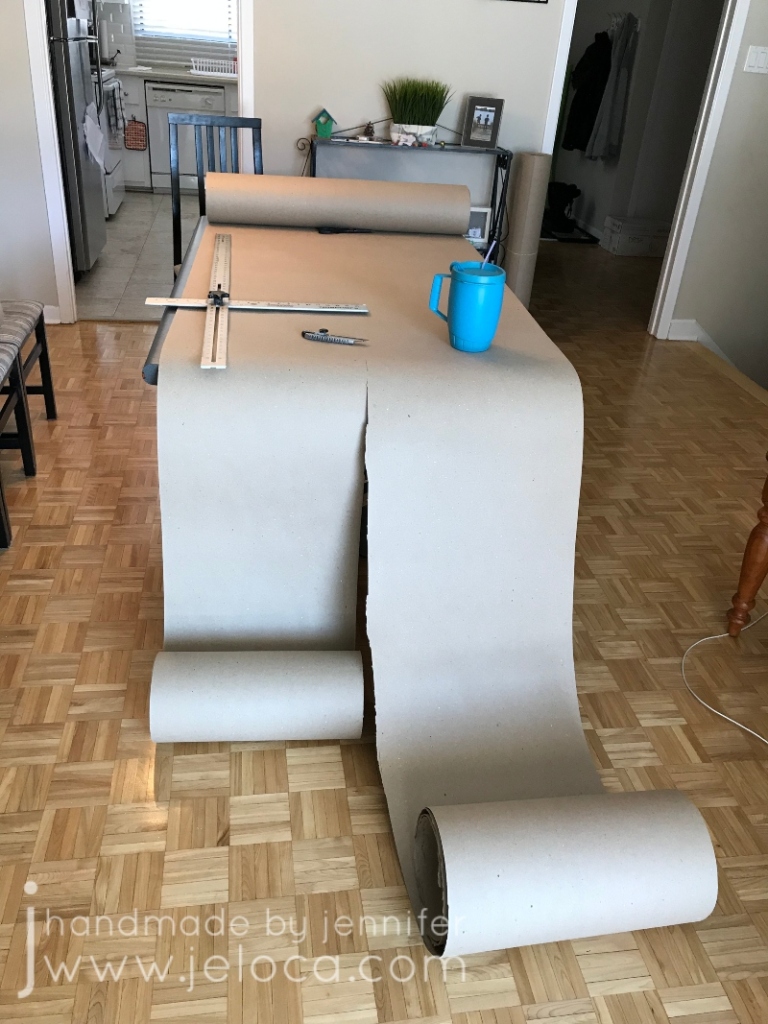
This is the roll of recycled paper I used. The split sections were cut for the matching stage runners and then I cut a piece about 4.5′ long for the warp pipe itself.

This entire project was done with inexpensive materials, including the acrylic paint.

Start by painting the entire surface the pipe’s base green. I didn’t cut the pipe shape at this point because I would be using the side edges to line up my pattern.

Once dry, draft the pattern onto your surface. You can measure it out if you like but I found it easier to use carbon paper to trace the top pipe pattern, and then used a ruler to measure out and repeat the checkered grid 6 times. By tracing the top with carbon paper I had the exact placement of the vertical lines and was able to easily use a ruler and continue them down to where the lower section began.

For the lower pipe section I repeated the process, tracing the top of the lower pipe and the first checkerboard repeat. I then moved the template down to the bottom edge and traced the vertical lines again. I didn’t trace the horizontal lines as I wanted to measure out the checkboard squares themselves, but by tracing the vertical lines I was able to connect them to the ones higher up and ensure my lines were straight. It really helps to use the longest ruler you’ve got! I use this adjustable t-square for drafting and as a cutting edge and love it.

I boosted the contrast on this image to try and show all the pencil lines. I wasn’t terribly concerned about them showing through the paint as this is a stage prop and wouldn’t be seen from close up, but if you are concerned about that you can sketch lightly or erase your lines slightly to soften them (though that might require paint touch-ups later).

Now that the guide lines were in place I used a craft knife and my ruler’s edge to trim the side for the warp pipe’s shape. I then painted the lighter green color. You can also do this in reverse – do your base layer in the lighter shade and then add the darker details later. You can also sketch right onto your untouched paper and paint both colors later, if desired.

Do as many coats of the green as required for it to be opaque. Once the greens are dry, add a black border and shadow under the top section.

You could stop at this point but since mine was for a set piece that would be carried on and off stage for at least 6 shows and a handful of rehearsals, I wanted to make sure it would be durable. I knew it would be glued to wood but didn’t want the paper to tear or have paint flake off. So I decided to use my favorite cheap & easy lamination method – clear packing tape!

Start by adding one strip of tape that overhangs your piece on both ends to secure it to your cutting surface. (My cutting surface is my dining room table, which has many cuts from previous projects. Don’t be like me LOL).

You’ll want the tape running either vertically or horizontally, but for the best look you want it running in nice, straight lines. I used the edge of the black border to line up my first strip.

I deliberately DIDN’T line up to the edge of the pipe, even though I was confident my edge was straight. This is because I wanted my edge piece of tape to be centered half on, and half off the edge, so I could fold it over the edge for protection.

Continue taping, doing your best to keep the tape smooth and flat, without wrinkles. Large air bubbles can be popped with a pin and smoothed out but an even application will help avoid them. If you look closely at the top left of the pipe in the image above, you can see the tape overhanging the side of the top of the pipe, about to be folded to the back.

Here it is fully taped.

If worried about the glare from the tape you can also use Mod Podge or a spray sealant.

And here it is in the show! For reference, that’s me as Wario, and I’m 5’4″. It made a great bit of stage decor and a convenient hiding place for some skit props we hid behind it!

Other Mario-themed posts you might like:

This post may contain affiliate links. This means I might make a small commission on purchases made through the links, at no cost to you.


Leave a comment

Retro DIY 3D Doritos Bag

It’s Super Bowl Sunday, and everyone knows the best parts of any Super Bowl are the snacks and the commercials, right? (No? Just me?)

It’s been 24 years (!!!) since Ali Landry famously tossed 3D Doritos into a laundromat dryer in an ad during Super Bowl XXXII, and 1 year since she showed she’s still got the same moves for snacking. I had to recreate this vintage snack a few years ago as a prop for a skit that took place in the 90s, and today I’m going to show you how you can make your own. Whether it’s for a play, a costume accessory, or simply nostalgic feels, it’s a quick and easy DIY that doesn’t require many supplies to make.

Note: 3D Doritos were relaunched in 2021 and got Matthew McConaughey’s “FlatMatthew” ad during Super Bowl LV, but they redesigned the bag so we’re going to focus on the original.

Besides access to a printer, you’ll need a few other supplies:

  • paper
    • I used full-page sticker paper, but you can use regular printer paper as well. If using sticker paper make sure it’s white and matte.
  • Markers or colored pencils
  • clear packing tape
  • scissors
  • glue stick (if you used printer paper)
  • 1 bag of regular Doritos

Start with your bag of Doritos. Empty the bag (into a bowl… or your mouth… no judgements here) and then carefully wash the inside and outside with soapy water. You want to make sure there is no food left inside that could mold over time, as well as remove any greasy or oily fingerprints from the outside that could interfere with your glue/tape.

3D Doritos have a red background so I used a bag of regular nacho flavor Doritos as my base so the back of the bag would match the altered front. Allow your bag to dry thoroughly before attaching your image.

Find a source image online and print it to scale with your bag. There are a number of great image resources out there, so you can use your favorite. Just be sure to choose a the highest image quality you can find, for the best results when printing.

If your printer quality is lackluster, like mine, you can retouch your printout with markers or colored pencils. I needed my prop to be highly visible from stage to an audience of 200-300 people, so I chose to deepen some of the sections for higher contrast.

In the image on the left, you can see the difference in the retouched red (to the left of my marker) vs unretouched (the right side, which I’d already outlined with the marker). In the middle image you can see the yellow marker inside the D, and in the last image you can see the contrast between the first half of each word vs the paler second half.

Once you’re happy with your retouching, cover the entire image with clear packing tape.

Try to be as smooth as possible but if you get a few wrinkles (like I did) it isn’t the end of the world as we will be crumpling the bag later. The wrinkles won’t show from the audience so don’t stress over them.

Here you can see the vivid difference between the retouched, taped good copy and my first print that was slightly too small.

The final image is bolder and more vibrant, with higher contrast. It also more closely resembles the shiny foil of an actual bag of chips vs a printed piece of paper.

Trim your image to the size of your bag. If using sticker paper, peel off your backing and apply your sticker. If using regular paper, cover the back with stick glue then set it in place.

Use more packing tape to seal all 4 edges so your new chip bag front is fully secure.

Continue around the back, and fully cover the back, bottom seam, and open edges with packing tape as well. Foil bags tear easily and the packing tape will keep your prop from falling apart when handled.

We needed an open bag that an actor could pretend to eat from, but you could just as easily stuff the bag lightly with crumped paper and tape the bag shut, to recreate a brand-new, unopened bag of chips.

The final step after taping is to crumple the bag like crazy. For real! Squish it, scrunch it, really work creases into that tape! Real bags will fold and crease easily and stiff, straight surfaces will spoil the illusion so don’t be afraid to crumple it up into a little ball and squeeze well.

Dig in!

This post may contain affiliate links. This means I might make a small commission on purchases made through the links, at no cost to you.


Leave a comment

Make a Snake Squishy Out of a Pool Noodle

Today Lunar New Year 2022! It’s also National Serpent Day! While today starts the Year of the Tiger, my Chinese sign is the Snake, so I think that makes this a perfect day to share this snake-themed DIY from my backlog of never-before-posted projects.
I’ve always loved snakes and Jakob inherited that affinity from me at an early age.

In fact, here’s him at about 3 years old proudly showing off a live snake around his neck!

Back in 2016 I was doing the Christmas gift prep and realized I was short on a stocking stuffer for him. I’d been on a squishy-making kick, having made an assortment of faux food for Henri’s robo-hamster, and decided to try and see if I could figure out how to make a snake for Jakob.

It worked perfectly, and here’s how you can make your own:

You will need:

  • pool noodle(s)
    • You can get multiple from one noodle, though can make them as long as you wish. I’m not going to put an Amazon link – you can get them much cheaper at your local dollar store!
  • puffy paint
  • scissors
  • pencil
  • craft knife
  • craft sticks
    • At least 1 per color you plan to paint
  • paper plate or other disposable surface

Start by cutting the pool noodle to your desired length.

You can use scissors for this but I find it easier to get a flat cut with a knife, and slicing halfway through then rotating and slicing the other half to match.

Draw a diagonal line around your noodle tube. This will mark the divisions where your snake is coiled up.

You can score the line with the tip of your pencil or knife/scissors to make it more visible and easier to follow.

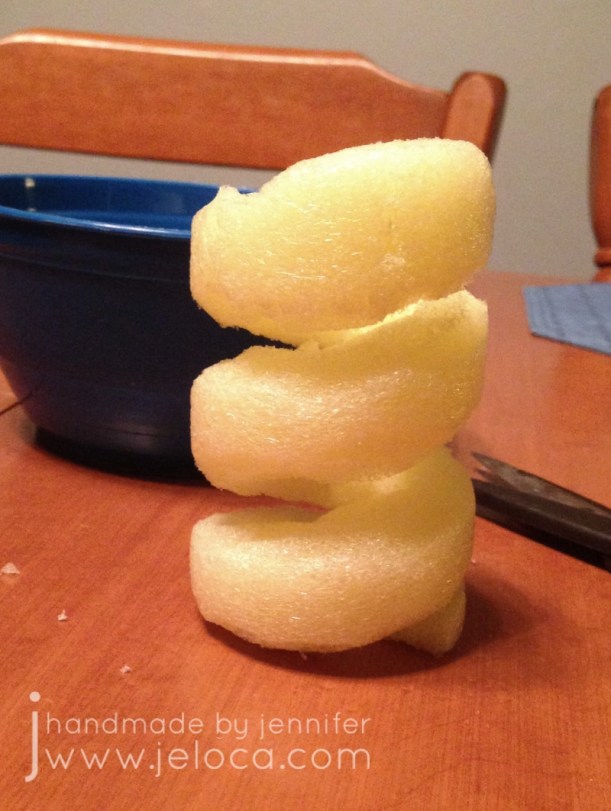
Starting at one end, cut through your tube to the hole in the center and then cut along the line you’ve scored. Try to keep your line straight though it’s ok if it’s a bit messy at this point – it will get cleaned up in the next step.

Remember that one end is the tail and the other is the head, so start your cut on the diagonal as in the image above, to create the point of the snake’s tail. Stop your cut short at the other end and then cut vertically to leave a wider, flat edge which will become the snake’s head.

Once your basic shape is established, you can clean it up. Use your scissors to take small snips on the diagonal of each edge to round out the snake’s body. Shape the head, and you can carve in any other details you’d like, like eyes or scales.

If you want to make sure your snake will stand on its own, make sure one edge is flat.

Don’t forget to make sure that there is enough room between the coils to keep them from sticking to each other as you are painting.

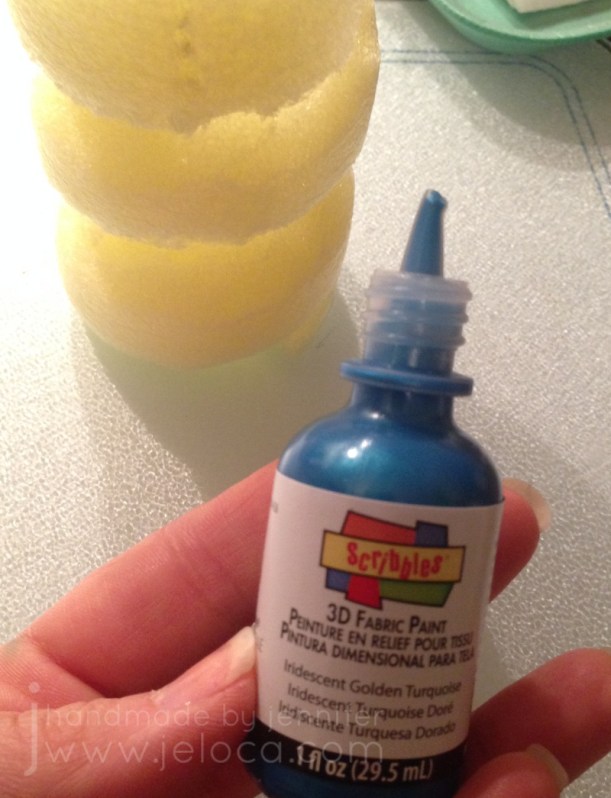
Then you get to paint! You want to use puffy/fabric paint in opaque colors. If you use colors that are too translucent you will need to do many more coats. If that is the case I would suggest a base layer of an opaque white first.

Note: Do not use acrylic/craft paint! If you do, the first time you squish your toy the paint will crack and flake off, which would be a shame after your hard work. With fabric/puffy paint your toy can last for many years.

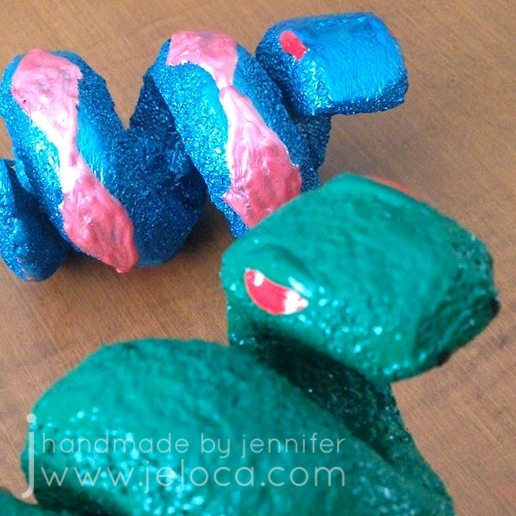
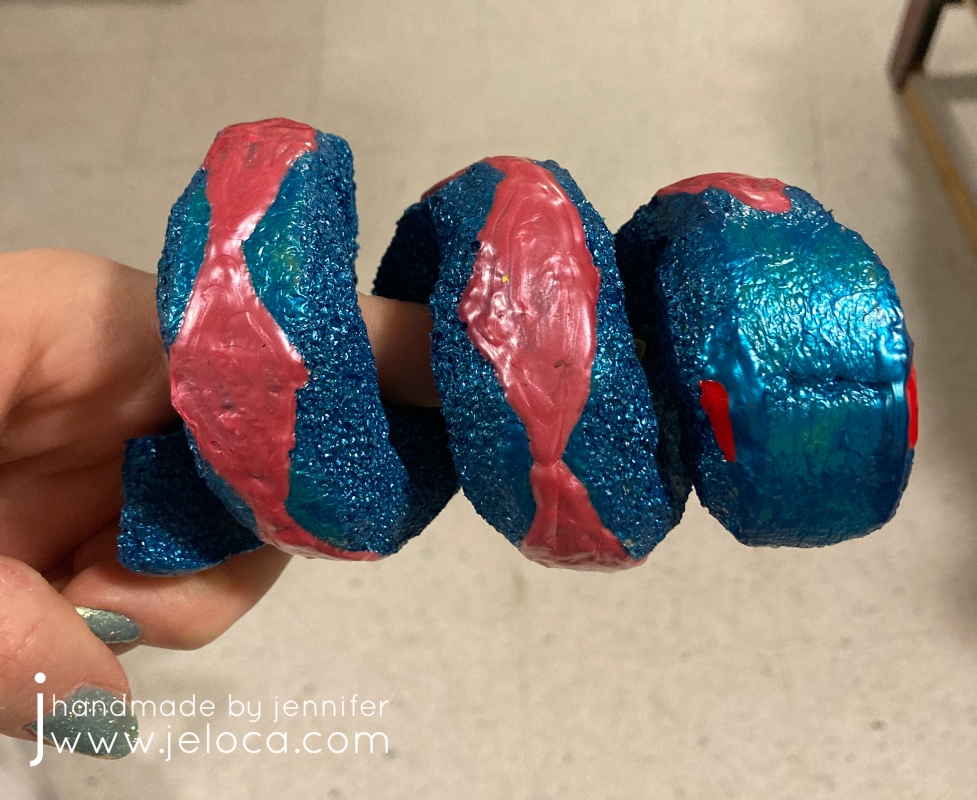
(Here’s a pic I took as I’m typing this in 2021. Looks brand new!)

Don’t try to use a paintbrush! Squeeze some paint onto your squishy then spread it out with a craft stick. Repeat this process everywhere you want the current color, remembering to leave one side or base unpainted so you have somewhere to set it down while the paint dries.

Continue in this manner, adding more paint in your desired colors. Allow each coat to dry thoroughly between layers. When the body is dry, you can paint the base with the same number of layers.

When the final layer is dry you can add further details like eyes or scale patterns.

Not only are these little guys easy to make, but they make ASMR-like sounds when squished.

(Sound on!)

I hope you enjoy making your own!

This post may contain affiliate links. This means I might make a small commission on purchases made through the links, at no cost to you.


1 Comment

Turn Any Playset into a LEGO Playset!

It’s International LEGO Day today, so to celebrate here’s a really easy DIY you can do to turn any dollhouse/playset with flat surfaces into a LEGO playset!

That’s right – with just a few simple household tools we’re going to turn this:

into this:

What you’ll need:

For this project I used this ArtMinds Wood Castle (linked above).

Jakob had received this castle as a Hanukkah gift from my parents and I wanted to surprise him by turning it into a LEGO playset since he never really played with action figures but was completely obsessed with LEGO.

If working with an unfinished product like this castle, you’ll want to sand it before you begin. Some of the edges are unfinished or rough and could cause splinters. The wood is soft, though, so it’s easy work to bring it outside and give the exposed edges and surfaces a quick sanding. This will also help make sure your surfaces are flat.

If using something like a plastic play house, you will want to sand any of the surfaces where you plan to attach LEGO plates to help ensure they stick well.

After sanding, wipe all surfaces with a damp sponge or paper towel. You want to remove the fine sanding dust so it doesn’t interfere with your glue later.

We’ll be using a craft knife to score the LEGO baseplate and LEGO bricks to give us a good edge to cut and snap from.

In my case, every surface in the castle had the same depth, so I wanted to start by cutting my baseplate into strips that were the proper depth. Then later I could cut them into individual pieces for each section.

Set the corner of your baseplate into the corner of one of your sections and use a separate LEGO brick to mark the edge line. We don’t want to cut the studs in half so if necessary err for pieces that are slightly too short instead of ones that would stick out beyond the edge of your playset.

Once you know your depth, use additional LEGO bricks to continue the line all the way from edge to edge. Do not use flat bricks for this as the thickness of the standard bricks will help keep your blade from slipping. Be sure to press the bricks securely as any gaps where they’re not properly seated onto the plate could allow your blade to catch.

NOTE: use a cutting mat or cut on a protective surface. I use my table as a craft table so I cut directly on it. Don’t be like me!

Run the blade of your craft knife down the edge of bricks once or twice, then snap your baseplate away from the cut edge. If you use enough pressure when scoring it should snap cleanly.

If the baseplate doesn’t snap clean off, you can slide your craft knife down the cut edge and the two pieces will separate easily.

Here’s a video for those who find it easier to see the process:

As you can see, with proper pressure the piece will snap cleanly off with a neat, straight edge.

Now that you have strips that are the proper depth, use the same brick-marking method to mark off the width for each section you want to cover. Do each section one-at-a-time.

Here’s the first baseplate flooring cut to size and inserted in place.

NOTE: They are not glued into place. I merely like to place them where they’ll go to help me keep track of what I have left to do, and to make it easy to know where they will go later.

Repeat this process until you have cut baseplates for every surface you’d like to cover. I did all floor surfaces, as well as the stairs. After this image was taken I also cut pieces for the windowsills and doorframes.

When all your pieces are cut, lightly roughen the backs of each with your sandpaper. You want to remove the plastic’s shine and roughen up the surface to help the glue better adhere. At this point you can plug in your glue gun so it can start warming up. I like to keep my glue gun on a silicone mat or scrap tin foil to protect my surface from glue drips.

Apply glue to the back of each piece and hold in place for a moment, pressing firmly. Once all the sections were glued I set it aside overnight so the glue could harden fully.

That’s all it takes! One baseplate was enough to cover all the surfaces shown plus have some extra left over.

The studs on the floors and stairs allow your Minifigs to be posed nearly anywhere, and the ones on the windowsills are really cute to put flowers and plants. Plus you can build off the plates, creating LEGO furniture for your playset.

I couldn’t resist staging a few characters for Jakob to find when he got home from school.

The “renovation” was a big hit, and while it only took a bit of time over one evening to do, it has held up since 2018 and is still going strong. I hope you enjoy this DIY and that it gives you inspiration on how to convert existing toys that might not be getting much love into ones that will be played with for many more years.

Happy International LEGO Day!

This post may contain affiliate links. This means I might make a small commission on purchases made through the links, at no cost to you.


12 Comments

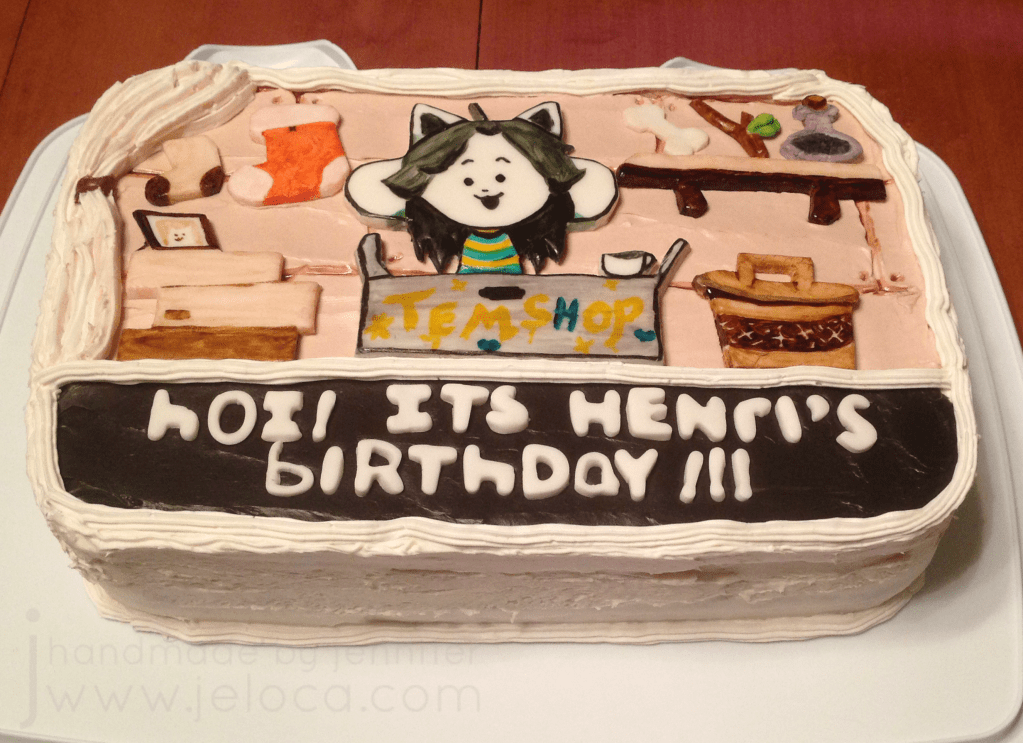
How to make an Undertale Tem Shop Cake

Henri is going to be 13(!!) on Saturday, so between now and then I’m going to share some of his past birthday cakes that haven’t hit the blog yet, with full tutorials for the ones that are possible. First up is this Tem Shop cake from his 8th birthday, back in 2017

The kids (and I, if I’m being honest) were bit hard by the huge phenomena that was Toby Fox’s Undertale. The name “Flowey” instantly evokes a bigger horrorscape than the trippy sequence in Fantasia, we use “determination” in more sentences than appropriate and often have Megalovania and the rest of the incredible soundtrack on repeat. For a while Henri’s favorite character was Temmie and in addition to adding “Hoi!” to nearly everything he said, he was determined to have a Tem Shop birthday cake.

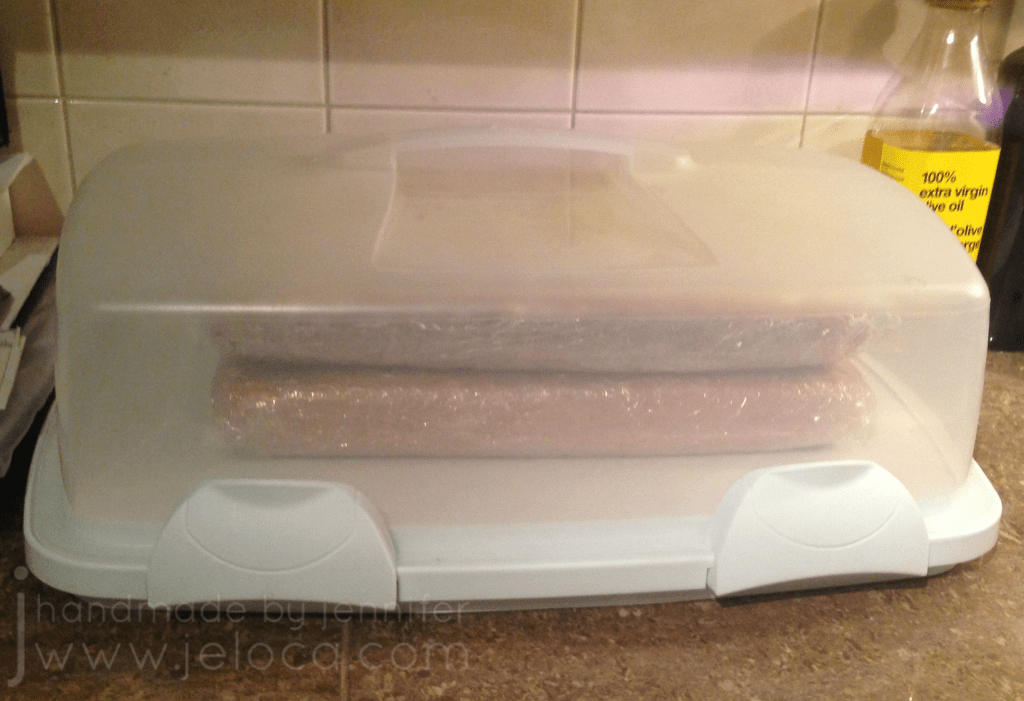
A few days before his party I baked up 2 cakes in my usual way and set them aside so I could work on the fondant toppers.

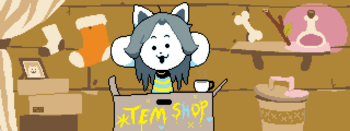
I found a reference image from the game online:

Then I resized it to the scale of my cakes, using the baking dish as a guide.

The bottom third of the cake would be the black text box that’s always present on screen, so I scaled my reference image to fit 2/3 of the cake and printed it out.

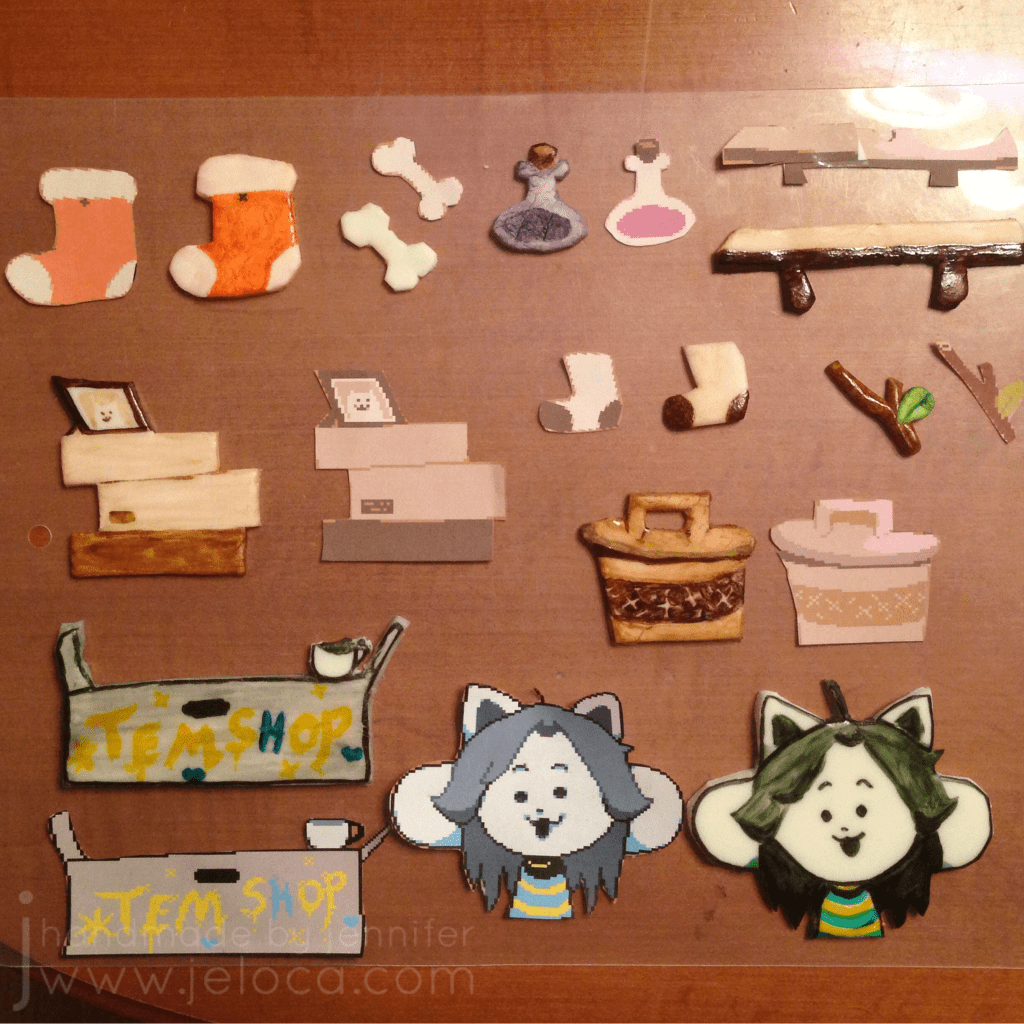
I rolled out some white fondant onto my Wilton measuring mat, using my roller with spacers to get an even thickness. Then I used the blade tool from my gum paste tool set to carefully cut out each piece.

I set the pieces aside for a few days, flipping them over about twice per day, so they would harden. The more moisture that gets removed from the fondant prior to painting the better, since painting will add moisture and I don’t want the sugar to melt down.

Anytime I do fondant painting (ex: Minecraft cake, Charlie & Lola cake, Skylanders cookies, Montreal Canadiens cake) I always like to assemble all my supplies within reach. This includes the paintbrushes and palette I use exclusively for food, Wilton and AmeriColor gel colors, a small jar of vodka for diluting icing gels, toothpicks for getting the gels out of the tubs, plus icing sugar for thickening my homemade edible “paints”.

Gel colors dilute super easily, so a tiny dab on a palette is often all you’ll need for beautiful, rich colors.

I painted each piece to match its in-game counterpart. Most are easy enough to eyeball but if ever you’re not sure of dimensions you can sketch lightly over the reference with the tip of a pin and emboss guide lines into the fondant.

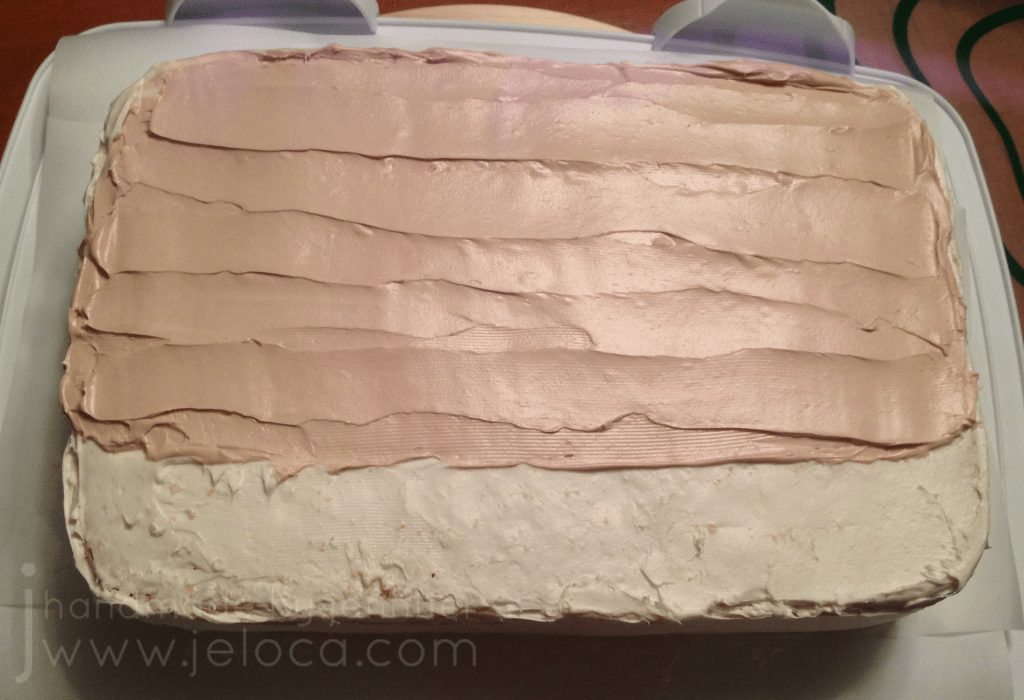
Once the pieces were touch-dry I prepared the cake itself. First I gave it a crumb coat.

Then I tinted some icing to match the wood background of the shop and applied it over the shop section of the cake, making sure to apply it thick enough to lightly carve into without reaching the cake below.

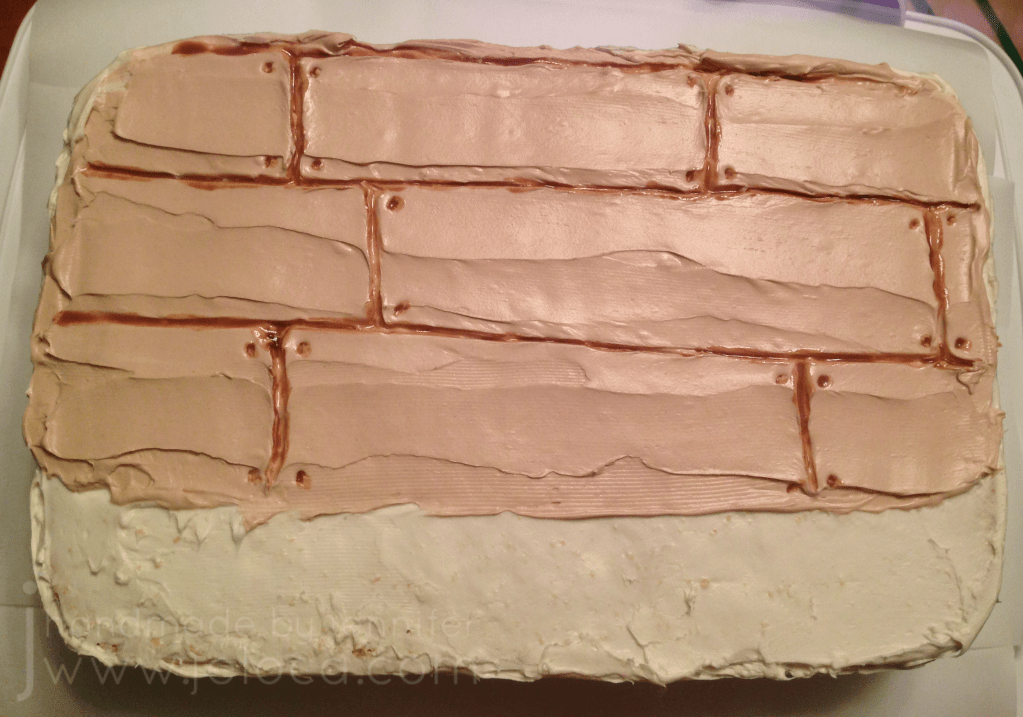
I used a toothpick to score lines for the wood wall then diluted some brown gel color and carefully flooded it into the grooves.

The final touch was to add some nail heads, and the wall portion was done.

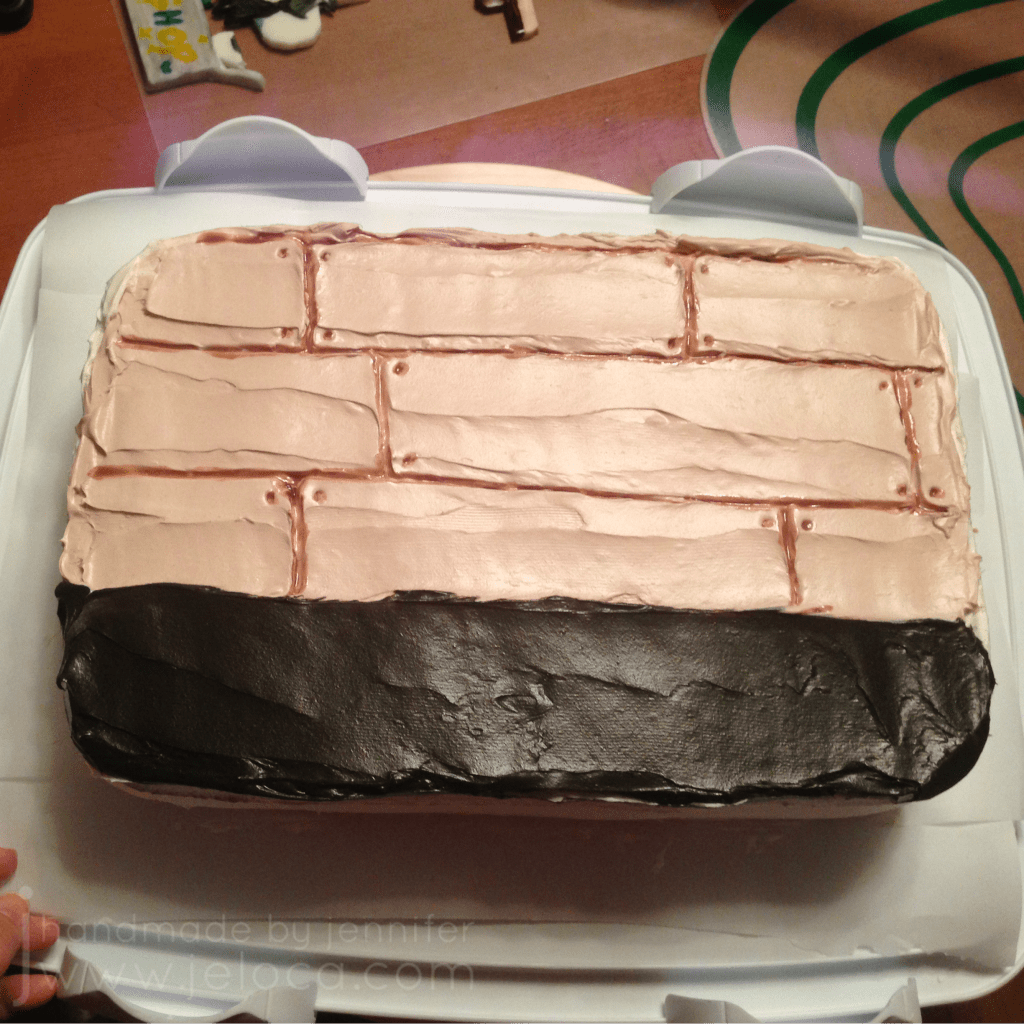
After that I tinted icing black for the text box.

Pro tip: if you start with chocolate icing (instead of white vanilla) you’ll use much less black coloring, which will avoid any bitter taste in the icing.

I covered the remaining part of the cake in black, and then added the figures, and then finished up the outside and edges of the cake with white icing to clean everything up.

If you add the fondant toppers while the icing is still moist, they’ll stick in place without issue. If your icing has already started to crust over then you can paint a little bit of water on the back of the fondant and that will adhere it in place. Try to avoid getting too close to the edges with the water, so it doesn’t leak out around the edges and cause bleeding onto the base icing.

Final step was to use a set of mini alphabet cutters to cut out the message in Temmie’s mixed-caps word style.

Again, for reference, here’s the image of the Tem Shop in the game:

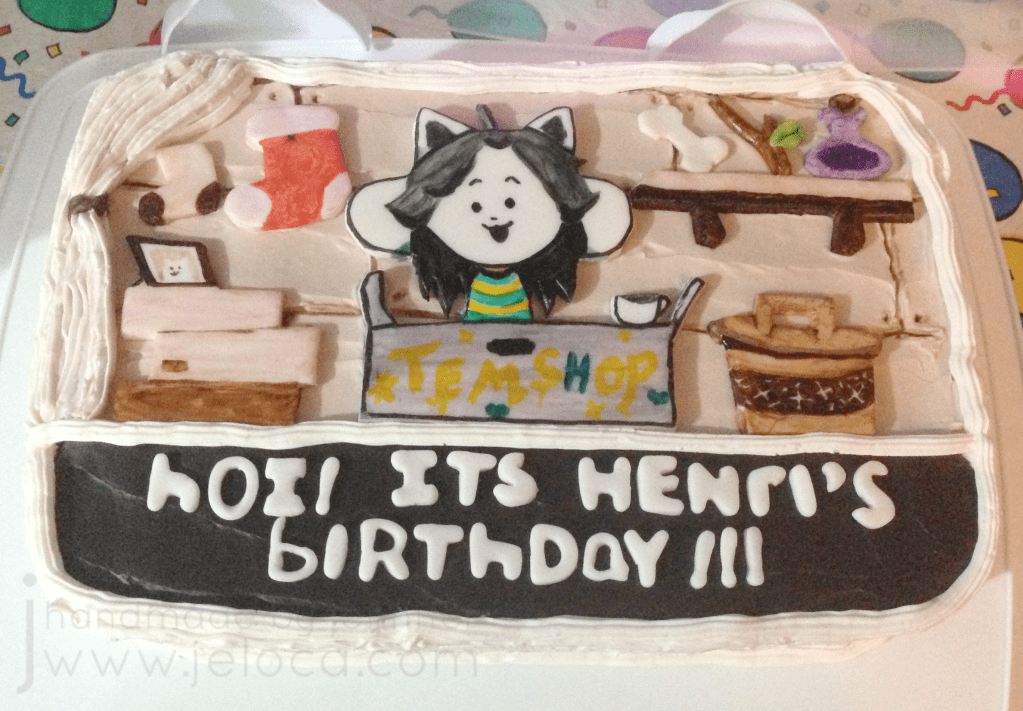
and my cake:

RATED TEM OUT OF TEM 🙂

Henri’s other birthday treats

This post may contain affiliate links. This means I might make a small commission on purchases made through the links, at no cost to you.


Leave a comment

How to Make Plastic Canvas Gift Tags

Looking for a different way to label your gifts this holiday season?

These personalized plastic canvas gift tags are quick and easy to make and are reusable as charms after the wrapping paper’s been recycled.

You only need a few supplies to get started:

  • plastic canvas – I used 7-ct but if you have a more complicated design that you want to fit into a small area, you can use 10-ct or 14-ct. (The “count” is how many holes per inch).
  • plastic lobster hooks – metal will work just as well. You can even cannibalize hardware from broken keychains or charms you already own
  • yarn – scraps from other projects will work great for this
  • yarn needle
  • scissors

The first step is to choose your designs so you can create a chart. My example tags were made for a young boy whose name starts with a “B” and was really into Minecraft, and a young girl whose name starts with “K” and was really into Monster High. So I decided to put their initials on one side and something iconic from each theme (Creeper & Skullette) on the other.

I used Excel to create my charts but you can just as easily use graph paper. If using Excel resize your cells into squares and then use the color fill to draw your designs, 8-bit pixel-style.

For the Creeper tag I went with a square shape since most Minecraft mobs have square heads. I then “drew” a capital b in a grid of the same size as the Creeper face. I decided not to do the typical blend of colors for the Creeper since this was just a quick add-on to the birthday party gift we were giving, but you can get as creative as you’d like!

For the Monster High tag I found a free-use Skullette chart and used the size of that chart as a basis for my “K” chart, which I drafted in a font similar to that of the Monster High lettering.

You have freedom to design anything you’d like for your tags! Your only limit is the total size you’d like your tags to be, as the bigger your design, the bigger the results.

The next step is to cut out plastic canvas pieces the sizes required for your tags. Remember that it takes 2 holes on the diagonal to make 1 continental or cross stitch with plastic canvas, so if your grid is 10×10 pixels then you need to cut out a piece of plastic canvas 11 holes x 11 holes, etc.

Stitch your pieces as desired. I used continental stitch (half of a cross-stitch) and did the green background for each piece first, leaving one piece with a tail about 3-4 times as long as the full perimeter. This is optional but by leaving the seaming yarn as your tail it’s one less end to hide later.

After the green I filled in the spaces with black for the “B” and the Creeper’s face.

I followed the same process for the other tag, working from background first to the details last, so the details would remain sharp and not risk getting fuzzy at the edges. First I did the white background (flipping Skullette so the bow would be on the right since the original chart was for Perler beads which get flipped after ironing), then the purple (as I didn’t have pink scraps handy), and finally the black, which I also used to backstitch some shading under the “K”. I didn’t do the tail trick for this one as I wanted to seam it with a different color.

To seam, hold the pieces with wrong-sides together and go from back to front through the first corner 3 times. Next whipstitch around the first side and when you get to the next corner, go through it 3 times again, and continue this process around. When you get to the corner where you’d like to put the hook, do the first corner wrap, then wrap twice while also going through the hook’s jump ring, then go through the corner alone once more.

After all 4 sides are fully seamed you can skim your needle through one side’s wraps and pull the yarn through, for about an inch, then trim the excess as close as you can.

These little tags are under 3″ making them perfect to clip onto a schoolbag or tote.

They really add a personal, handmade touch to a gift without taking too much time or costing the bank.

Have fun creating your own!

This post may contain affiliate links. This means I might make a small commission on purchases made through the links, at no cost to you.


9 Comments

Mini Cupcake Transport Hack

Today, December 15, is one of the many days recognized as “National Cupcake Day”. We’re also halfway to the holidays! In case you’re planning on bringing a little home-baking to your celebrations, here’s a quick and easy little tip to help you out.

Picture it. You’ve baked a dozen (or more) mini cupcakes. They’re all iced and decorated and smelling delicious. But you don’t have a cupcake carrier and your largest Tupperware is already in use! What do you do?

Voila!

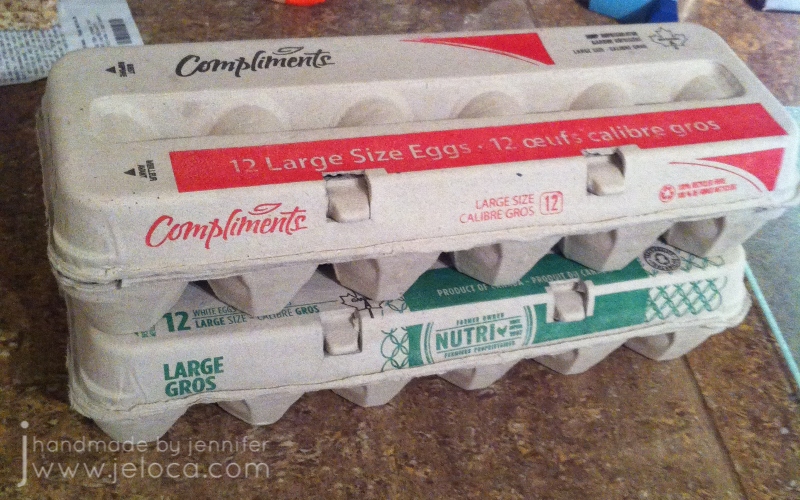
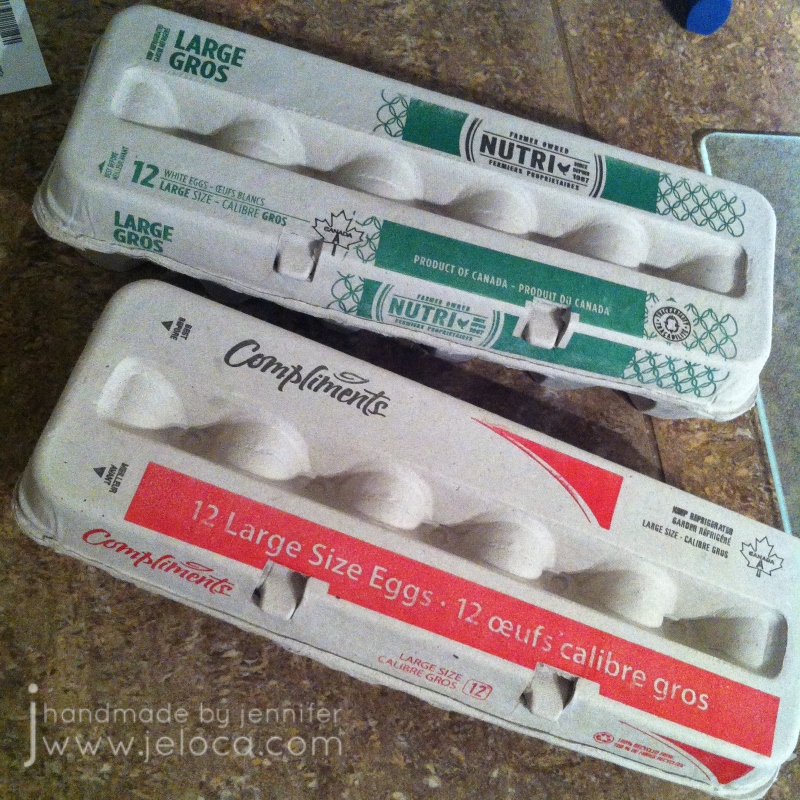
I know what you’re thinking. “If this is about cupcakes, why are you showing me egg cartons?”

Ahhh because those aren’t eggs inside!

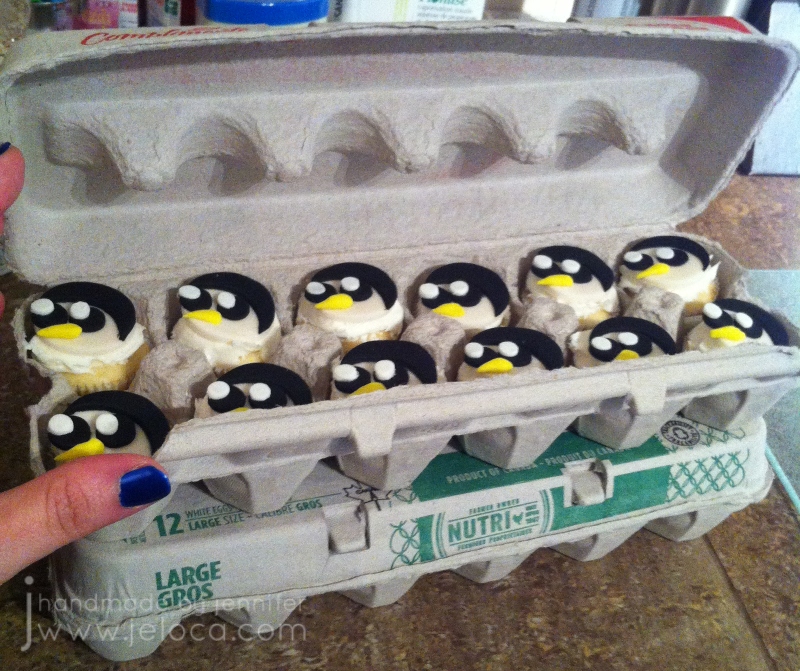
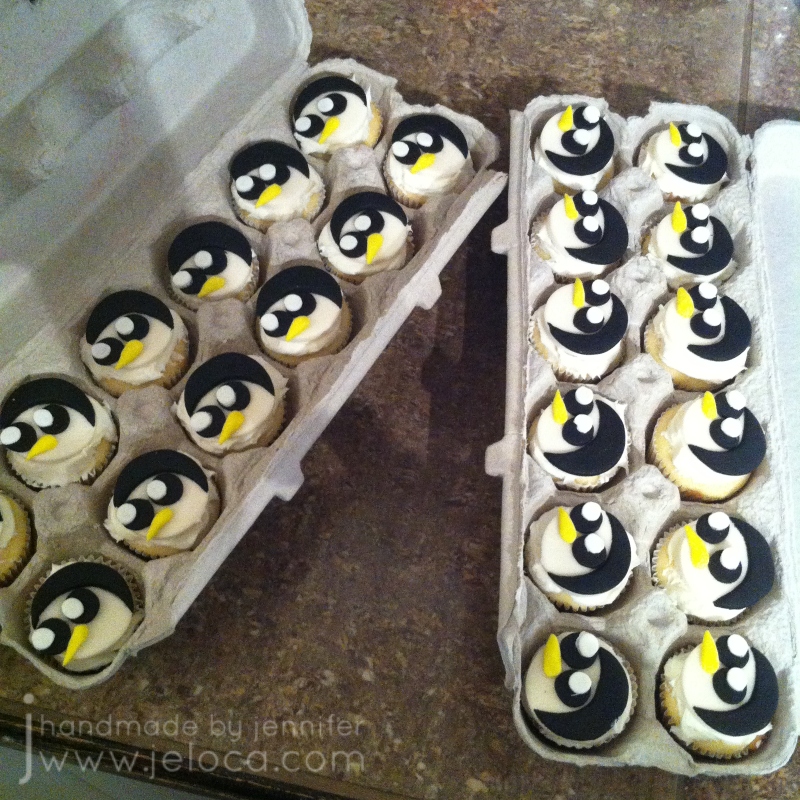
Surprise!

Ok ok, so I know what you’re thinking now. “Sure, it’s an easy way to get them to wherever I’m going, but how am I going to get them out afterwards? Won’t I squish the cupcakes? If I tug on the fondant toppers won’t they just pop off the icing? And what if I only have icing on top? I can’t very well grab THAT, now can I?”

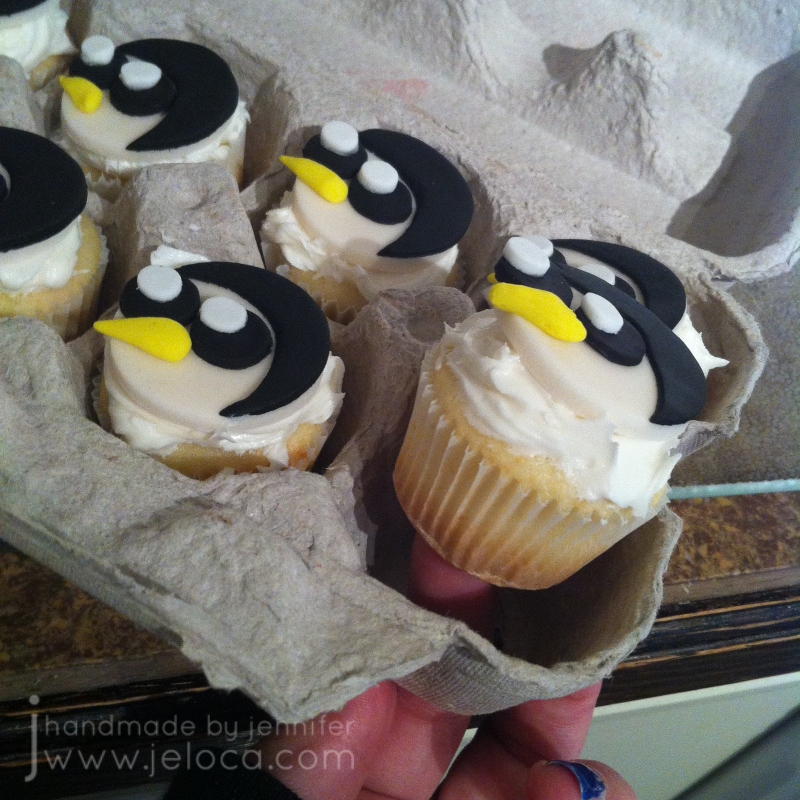
Ahh don’t worry, I’ve got you covered! It’s as easy as…

…1…

…2…

…3

Poke!

Of course it does take a quick moment of prep, so let’s rewind.

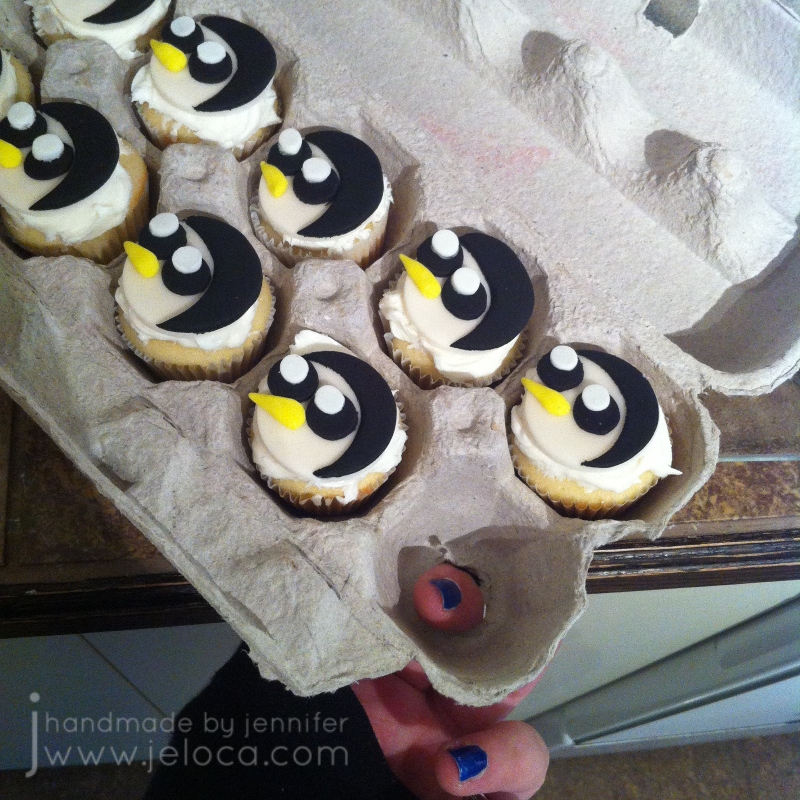
First, make your toppers. These were for Jakob’s 7th birthday, when he was super into Adventure Time. His birthday cakes 2 years in a row were AT-themed, and these cupcakes were a little extra treat to surprise his class at school (back when we were able to do that).

As always when making most toppers (Pitfall cake, Charlie and Lola cake, Minecraft cake, etc) I recommend making them a few days in advance. Not only will this allow the fondant to harden, making placement easier, but it will also help prevent the fondant from absorbing moisture from the icing (or water/fondant glue) and disintegrate on you.

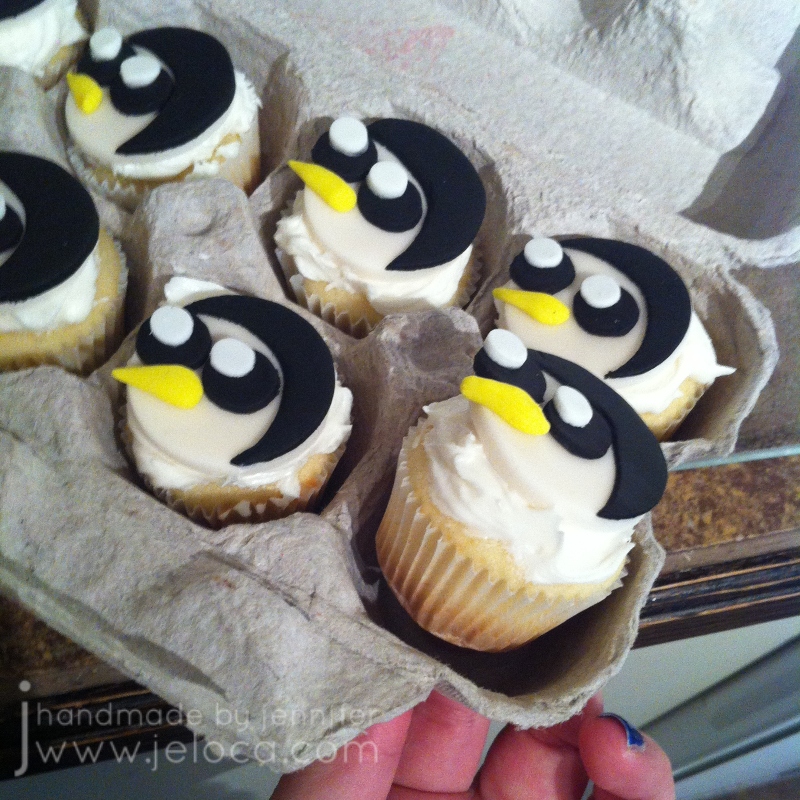
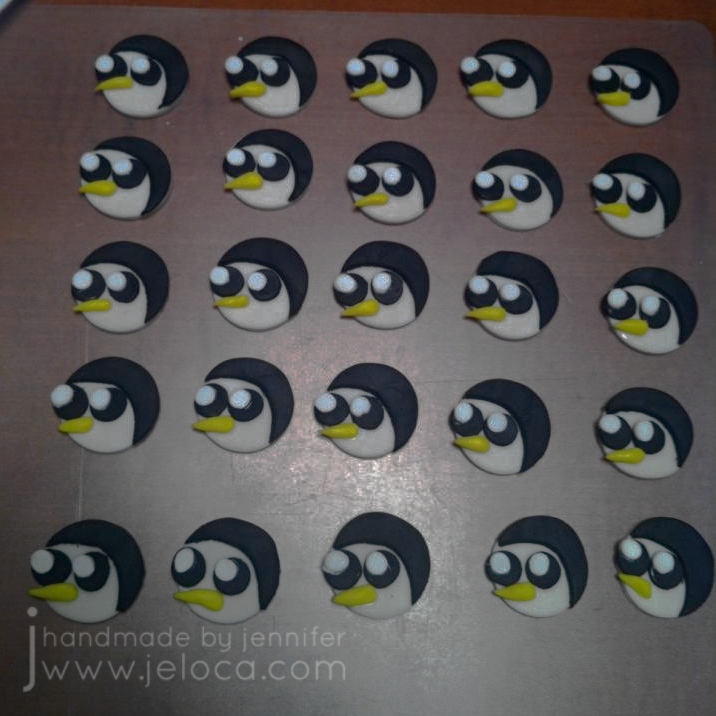
The Gunter toppers are pretty simple to make. Roll out some white fondant and use a circle cutter in your desired size for his face. I went with a cutter the size of the top of my mini cupcakes. I like to use a fondant roller with levelers but you can eyeball it. Roll your white fondant scraps a bit thinner and use your smallest cutter for the eye shine. For my size cupcakes I used a large smoothie straw for the eyes so a regular straw was perfect for the white shiny dots. Set the white circles aside and roll out some black fondant. Use the same cutter as for the head to cut one black circle for each face, and then shift it down a bit and cut away most of it to create a crescent moon-type shape. Use water or fondant glue to attach the black crescent to the white face, and then use the remaining black to cut out his eyes. Attach the eyes to the face and then the eye shine to the eyes. Finally get some yellow fondant (or tint the scraps of your white) and use your fingers to pinch off tiny pieces and roll them into mini cones for his beak. The cutters do the bulk of the work for you and assembly is pretty fast, making this a really simple design.

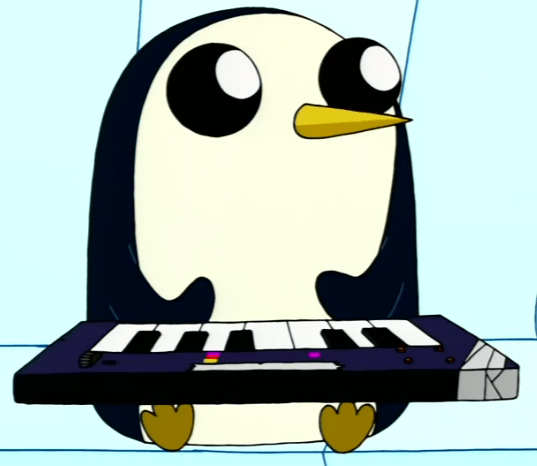
For reference, here’s Gunter in the show:

Next, bake your cupcakes. I didn’t take progress pics of this part but it was a basic vanilla cake recipe and a swirl of store-bought icing.

Bonus tip: empty your icing tub into a bowl and whip it up a bit with a hand or stand mixer. Not only will it be a lovely consistency for piping lush swirls but the air added to the icing will increase the volume, getting you more mileage out of what you’ve got.

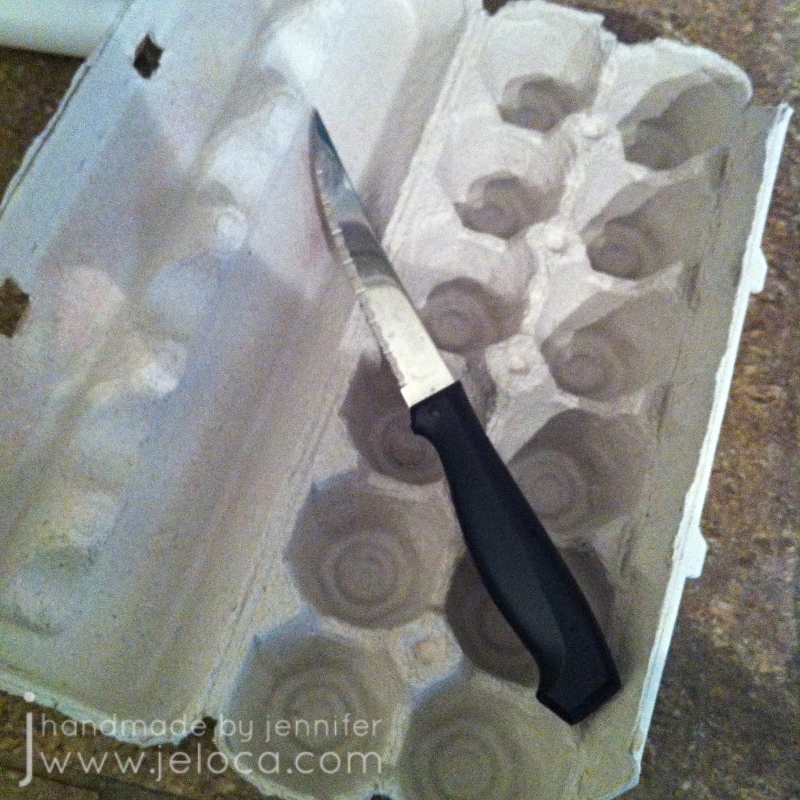
While your cupcakes are cooling you can prepare their carriers. Each egg carton will hold 1 dozen cupcakes (obv) and you’ll need something sharp for cutting out the bottoms. I found a knife/blade worked much better than scissors for this.

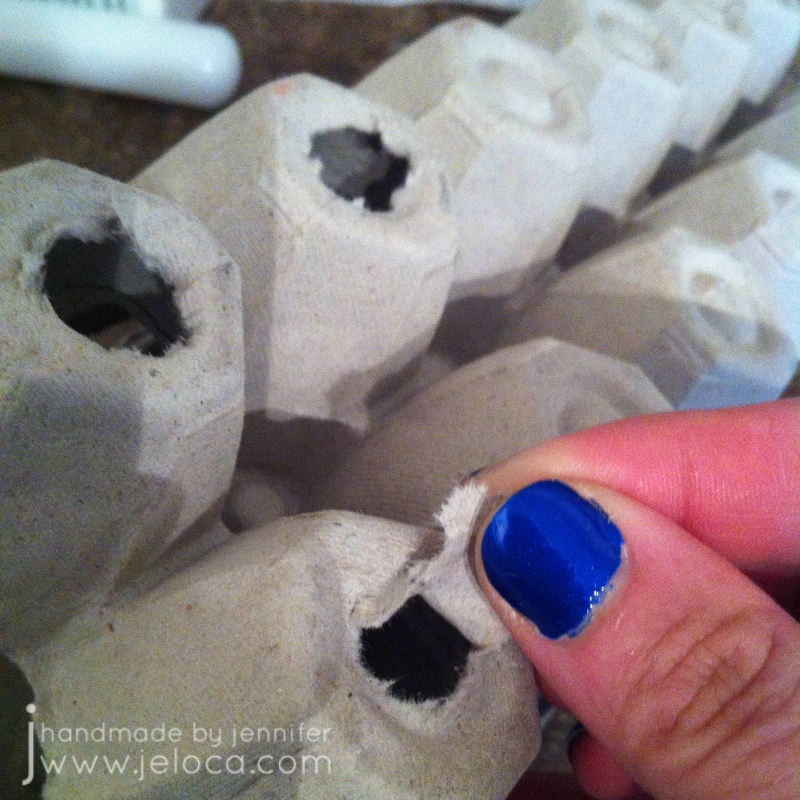
The easiest method was to cut around the carton’s own indent. Imagine the circle was a square and insert the knife straight down into 3 of the 4 “sides” of the circle. Then you can tear off the little flap this creates.

Give a little wiggle to push the cut edges to the inside. This will make it more comfortable for you later, and the raised little bits will also give the cupcake a bit of a shelf so it doesn’t fall too tightly into the hole and get stuck.

And that’s all it takes! Super easy, using something you’ve probably already got on-hand.

This post may contain affiliate links. This means I might make a small commission on purchases made through the links, at no cost to you.


Leave a comment

Glow Effects with Gel Pens

Today’s post is a little tip on how to use gel pens to get a special effect in your coloring book pages. In honor of Walt Disney’s birthday this week* I’ve used a page from my Art of Coloring: Disney Villains coloring book.

This is the original page. It’s slightly warped because on the back is a page I colored fully with my Inktense pencils and it was saturated over and over. While I do keep this book clipped shut (as shown in this post with my hanger tip) I’m still impressed at the thickness of the paper in this book. It’s definitely better than most of my coloring books!

As with many of the coloring books based on movies and tv shows, the scenes in this book are often pulled directly from a still from the original source material. In this case you can see the above image is nearly an exact copy of the second image from the movie, below. It looks like the book artist added a background detail and the mist with the llama above in order to make it more interesting as a coloring page.

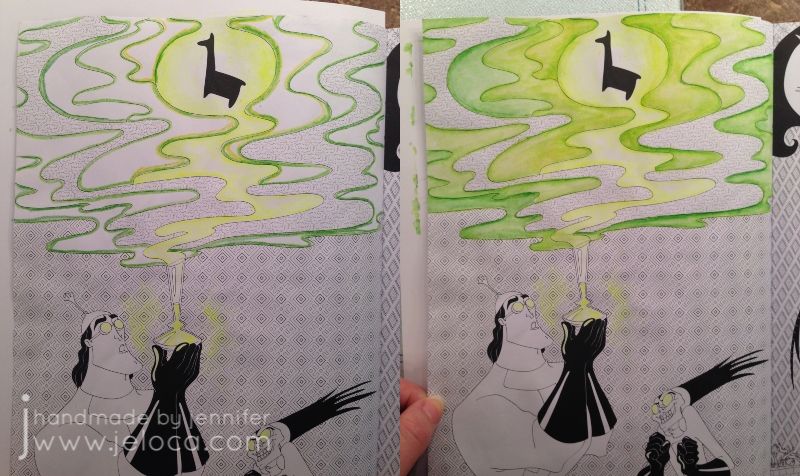
While I did use the still as a reference for the characters, I took creative liberties with the color of the potion as I wanted to see if I could achieve a glowing affect and thought the contrast with a yellow glow would stand out more than pink.

This is a super easy effect to achieve, and takes materials you’ve probably already got on-hand! All you really need is a gel pen in your desired bright color! I’ve also used a water brush for convenience, but you can swap in a regular paint brush and small cup of water and get the exact results.

You have to work fast so I wasn’t able to pause and take a step by step. Outline the area you want to have the glow, and then immediately while the gel pen ink is still wet, use a water brush or water-dampened paintbrush to blend out the gel ink.

The glow areas in this image are too large to do all at once as the gel would dry before I could get to it. So I worked in small sections, tracing just inside the lines of the swirl and blending the wet ink inwards. For the glasses and potion bottle I only traced on one side so there wouldn’t be too much ink. I then scribbled some of the ink on a piece of scrap cardstock (the shiny kind like used in consumer packaging) and diluted it with water to make a paint for the glow around the bottle.

That’s it! That gives a really cool glow effect that you can achieve super-simply, in almost any coloring project. To see the glow really pop, let’s finish coloring the page!

Switching to my beloved Inktense, I outlined the misty sections with a few shades of green. I didn’t record my colors but there was definitely #1400 (Apple Green) and I believe some #1520 (Hooker’s Green). If you look in the mist closest to the llama, you can also see some #0100 (Sherbet Lemon) to amplify the glow and pull the yellows into the mist.

With Inktense the rule is always “a little goes a long way” so I only needed the barest of color application to get the light wash you see in the image on the right. To blend out you can use a water brush or regular paintbrush with some water and moisten the drawn lines just like those old coloring pages in kids’ activity books.

Next I did the same for the background behind the mist, first filling it in with a super-light application of #2020 (Indian Ink) and then deepened up the borders with #2200 (Ink Black).

The main background first had a layer of the same Indian Ink followed by #750 (Dark Purple) since purple is the complementary color to green (opposite on the color wheel).

The last step was to finish the characters with a bit of #1800 (Baked Earth) and #1740 (Saddle Brown) for Kronk and #760 (Deep Violet) for Yzma, and #1210 (Dark Aquamarine) for the teal bits.

I love how this page came out! I’m continually impressed at the paper quality of this book. Having now done a fully water-saturated coloring on both sides of this same page, I’m amazed that there is no bleed-through or tearing. I love the bright glow of the gel pen against the ink, and especially the reflected glow in the goggle lenses.

I hope this tip helps you use your gel pens in new ways!

This post may contain affiliate links. This means I might make a small commission on purchases made through the links, at no cost to you.

*December 5th