11 Comments

Among Us Cupcakes Easy DIY

Most popular during the height of the pandemic, Among Us is back in the spotlight again thanks to one of the opening scenes in Glass Onion – the fantastic sequel to 2019’s Knives Out. Even Game Theory is “amongst thou”* with the trend so I thought it was the perfect time to share this easy fondant DIY on how to make your own set of colorful crewmates.

As I’ve said so often before I love to start with a template. It’s best to know exactly what size you’re working with so I measured the diameter of my cupcake tin and made sure to fit my crewmate sketch into the available space.

The crewmates are distinguished by their distinct colors so this is a great opportunity to use up leftover bits of tinted fondant from previous projects! With the exception of black which I’d purchased pre-tinted, all my other colors started as white fondant and were tinted with either Wilton gel pots or Americolor squeeze gel colors.

I rolled out a small ball of each color using my leveled fondant roller to keep the thickness of each piece the same. I didn’t bother getting out my fondant measuring mat for this one as the individual pieces were so small – instead rolling and cutting directly on my indispensable clear cutting boards.

Each piece was cut out with my fondant knife, making sure to flip the template halfway through so some crewmates would be facing the other way.

Yes- you can cut them all the same way and then flip some later. I find that there’s a slight bevel on the cut edge whereas the table-side edge is usually more sharp. Both edges are equally good as the “up” side and so I wanted to be able to use either, depending on how they looked once dried.

After cutting out all the crewmates I made a second template for the visor and cut out one for each little guy. I also cut out a little yellow Post-It to copy one of the game’s “hats”.

After the fondant pieces had air-dried for a day or so I traced the outlines with an edible-ink black marker.

This is how they all looked once traced. I let the ink dry down for a few hours so it wouldn’t smear during handling and then assembled the crewmates using a bit of water and a food-use-only paintbrush as “glue”.

Here’s how they looked complete with my hand for scale.

The little guys are now ready to go on a cake, on cupcakes, or anywhere you’d like! Henri’s 12th birthday was during the pandemic so I went the cupcake route for easy, non-shareable portions for a lunch with our family bubble at the time.

I prefer to add my toppers after the icing has crusted slightly so they won’t leech color from the fondant and risk bleeding edges. If you find the toppers won’t stay put a drop of water in the center will do the trick!

*For the GTLive fans 🙂

Henri’s other birthday treats

This post may contain affiliate links. This means I might make a small commission on purchases made through the links, at no cost to you.


12 Comments

How To: The Legend of Zelda Master Sword Cake

Today’s post will walk you through step-by-step on how to make this cake featuring the Master Sword from The Legend of Zelda video game series.

I’m a huge Zelda fan and the love for the series has been passed down to Henri with a vengeance! In addition to dressing as Link on Halloween and poring over game art collections he plays all the games from Link’s Awakening on my old Gameboy Color straight through to Breath of the Wild on the Switch. It’s on the BotW Master Sword specifically that he requested I use as the theme for his 11th birthday cake.

This is the Master Sword:

And this is the sword in the game:

I decided to use this image as the inspiration for my cake. The sword itself would be sculpted out of fondant and I’d expand the stone base so there would be enough cake for his birthday guests.

The cake took a total of 3 days to make. On Day 1 I sculpted the sword so it could have time to dry out to lessen the chances of the fondant dissolving under paint application. On Day 2 I baked the cakes for the base and set them aside using the methods I outline in my How to Bake a Cake and Prepare it for Decorating post. On Day 3 I painted the sword and the base. Note: you can absolutely merge Days 1 and 2 into one evening if you’d like.

As I’ve shared before, I like to start my fondant pieces with a template sized to the proper scale. I rolled out some white fondant using the thickest level gauge on my fondant roller to have a sturdy base for the sword, and then began cutting around my template with my fondant cutter.

Keep the excess scrap as you’ll need it to sculpt the details.

As a long, skinny piece of fondant this size would be fragile I used a clean, splinter-free wooden dowel as a support, leaving enough at the base to secure it into the cake.

Then I used the excess fondant and began blocking in the sword’s details. As you saw in the finished cake it would remain flat so I only had to sculpt the front half.
I used the template for the basic shapes and then referred to a clear online image to get the details right.

At this point I set the sword aside to air-dry.

Here’s how it looked the next day.

Here it is alongside the template. It did grow a bit as I sculpted additively but I knew the slight size increase wouldn’t matter with the final cake.

Pleased with it, and deciding it didn’t need any adjustments, I let it continue to harden and baked the confetti cakes Henri had asked for.

On Day 3 it was time to assemble and decorate!

I had 2 8″ square cake layers to work with. To achieve the triangular base I cut the first layer into two triangles by removing the center strip, ensuring that one triangle was slightly shorter than the other. I repeated the process with the second cake making each subsequent triangle shorter than the previous one. This design does leave extra cake that you can eat or make into cake balls with any leftover icing.
Note: always check your transport method! In my case I couldn’t simply cut the first square diagonally to achieve my largest pieces as the resulting triangle would have been too high to fit into my cake carrier!

I used a bit of icing to “glue” the cake to the carry board and then began to stack the cakes horizontally, icing in between to keep the layers together.

Yes- that IS Betty Crocker icing in the background. And yup- this is totally a Betty Crocker Rainbow Chip box cake. There is zero reason why a box cake can’t be done up the same way scratch cakes can. Whether you’re short on time, find the mixes cheaper or easier, or if you’re simply baking for a bunch of 11yo boys who won’t know or care about the difference then by all means go for it! I do generally doctor my cakes so the cake mix winds up more as an ingredient vs the main staple, but that’s absolutely not necessary to get great-tasting, great-looking results.

Once stacked I protected the board surface with parchment paper strips and dirty iced the cake, then covered it with more white fondant. Then came the fun part- poking, scratching and dinging it with an assortment of knives and sculpting tools to give it the texture of an old weather-beaten rock.

I put some wax paper strips down to protect the board again and then painted the “rock” with custom icing gel colors. I have a large collection of Wilton gel pots and a kit of Americolor icing colors and I like them both equally as they fill in color shades I don’t have in the other. The gel pots of the Wilton kind are great for dipping in a toothpick for a really tiny amount, while the Americolor ones are in squeeze bottles that make adding precise drops really easy – perfect for when you need to replicate a color you’d already mixed up.

I used an assortment of browns and yellow thinned with vodka for the main color, adding darker touches for shadows and age. I also dry brushed green shades around the base and edge as if grass or moss had started to encroach similar to how I indicated forest-y age on the fondant bricks in the Pitfall: the Lost Expedition cake.

Bringing up another reference on my iPad, I used the same supplies to paint the sword, adding in a bit of silver luster dust for the metallic portion.

The luster dust mixes nicely with a bit of vodka to become a metallic “paint” that dries down well once the vodka evaporates.

I used gold pearl dust in a similar manner for the gold accents and completed the rest with blues and green gel colors.

The last bit of prep is to cut out a small bit of the fondant so the sword fits nicely into place and then the cake is done!

Here’s a closeup of the cake “rock”. I love how the texture came out!

My only regret is not having smoothed the underlying cake surface better, as you can see the ridges of where the fondant curves around the cake layers…but the kids sure didn’t mind. It was a huge hit for the birthday boy and his friends.

Henri’s other birthday treats

This post may contain affiliate links. This means I might make a small commission on purchases made through the links, at no cost to you.


1 Comment

A Review 6 Years in the Making- 3Doodler Start 3D Pen

Today is National Technology Day so it’s perfectly fitting to share this product review of the 3Doodler Start 3D pen. This is not a technical review – so if you’re looking for filament info or product specs you’ll have to look elsewhere. This is strictly a child-user review and to spoil the end right at the beginning – we love it.

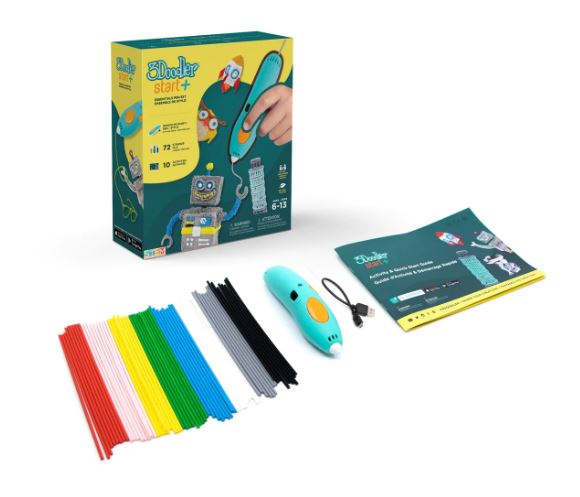
The 3Doodler Start + Essentials kit includes the rechargeable pen unit, a USB charging cable, as well as an assortment of filament sticks. It also includes an instruction book with a very unique feature – the paper is treated to make the softened plastic NOT stick to it. As such you can follow one of the many tutorials in the book by literally tracing the provided illustrations and your new 3D “print” will lift right off the page.

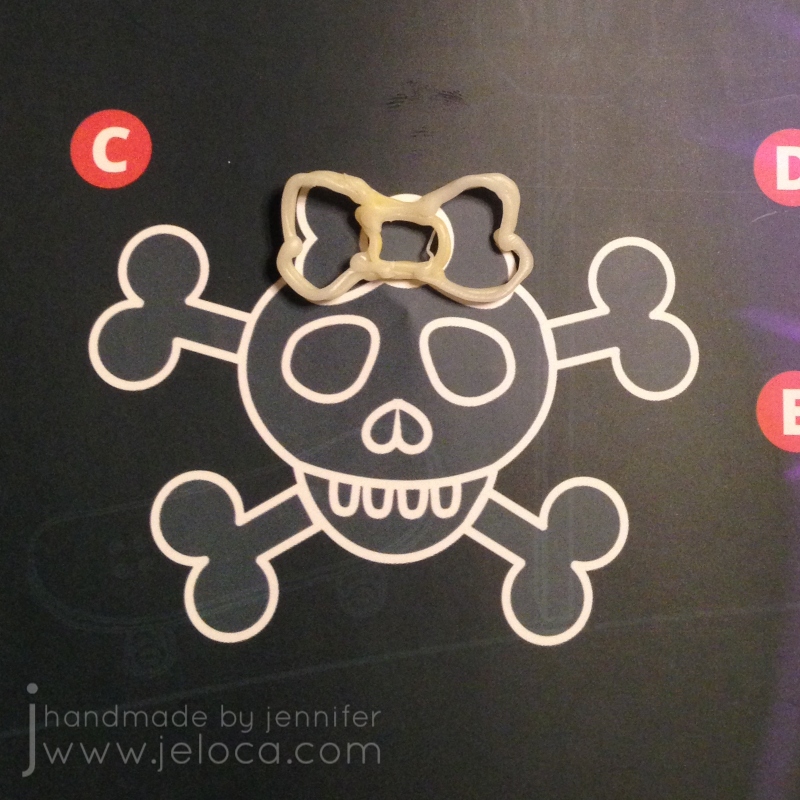
We wanted to start by trying it out on something small so Henri traced this skull’s little bow.

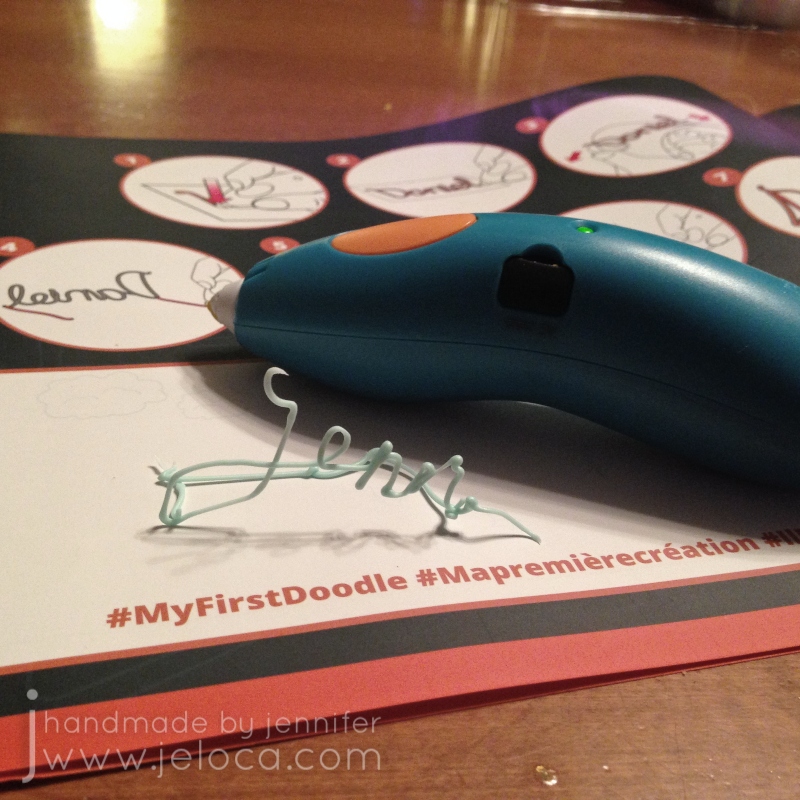
I then followed their clear, graphical instructions to write my name and turn it into a standing decor item.

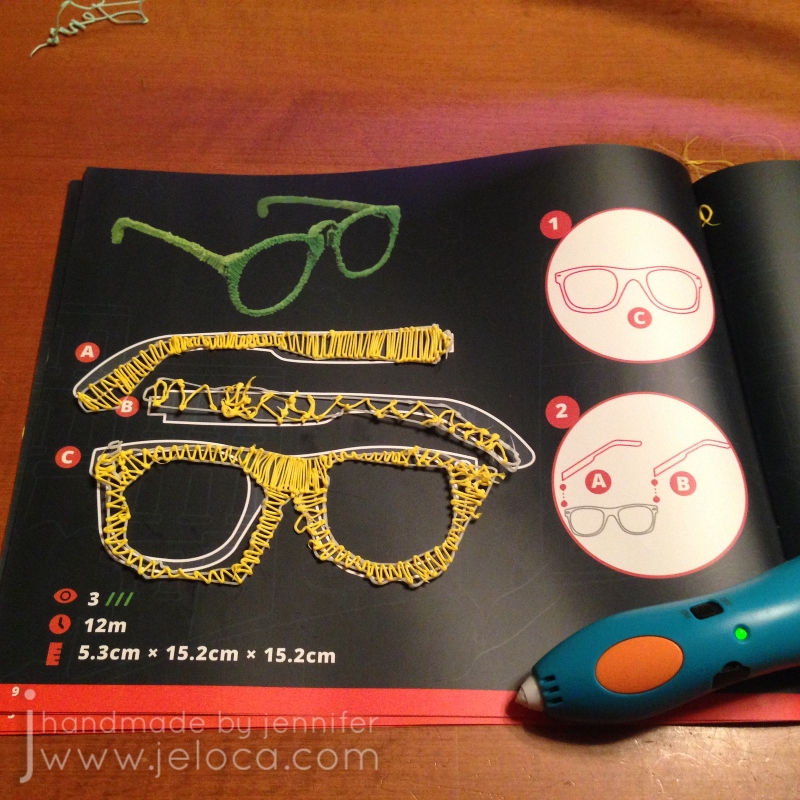
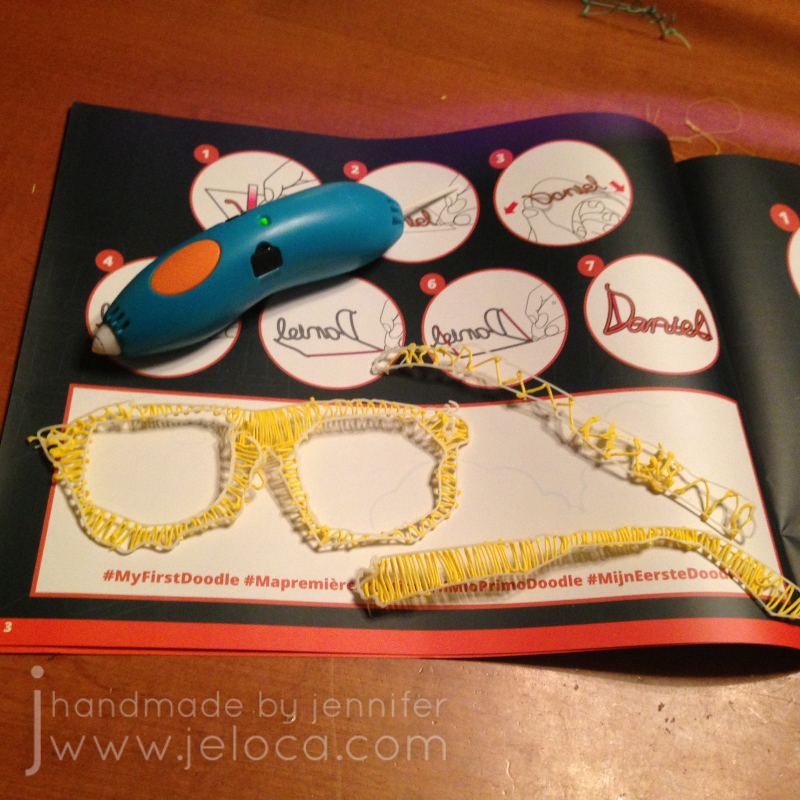
At that point we both felt confident enough to tackle one of the real projects: these 3D glasses.

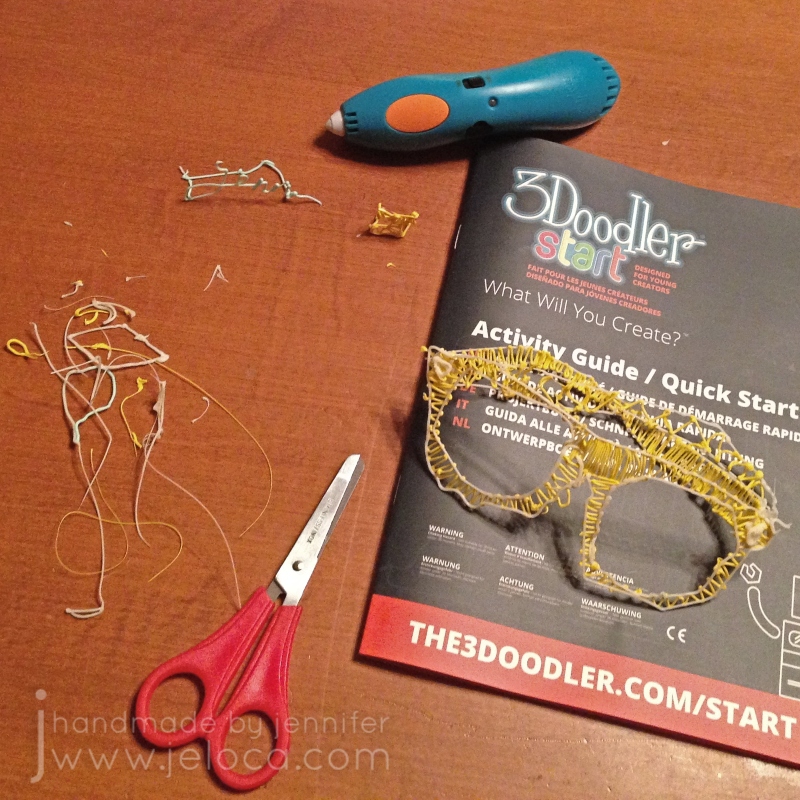
I traced the outlines of each piece with the light aqua filament and then we switched to yellow and began filling it in, taking turns between Henri and myself.

Before long we had all 3 pieces traced and filled, and since they don’t stick and solidify almost instantly they were able to be handled right away.

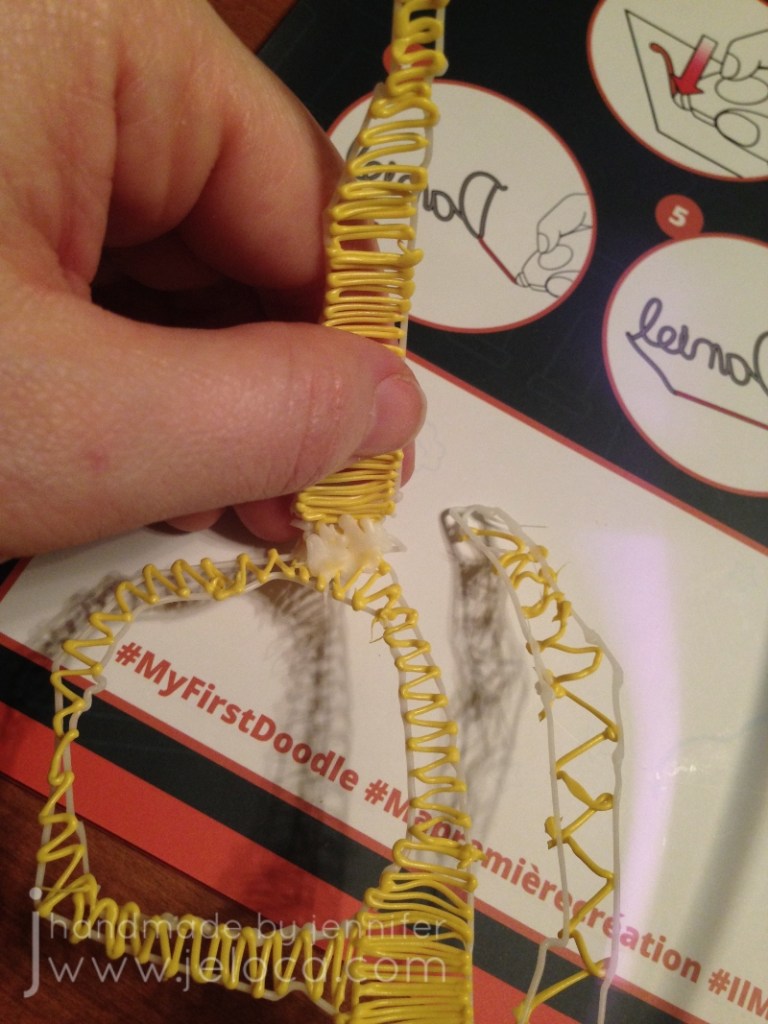
We used a bit more filament to join the arms to the front of the frame…

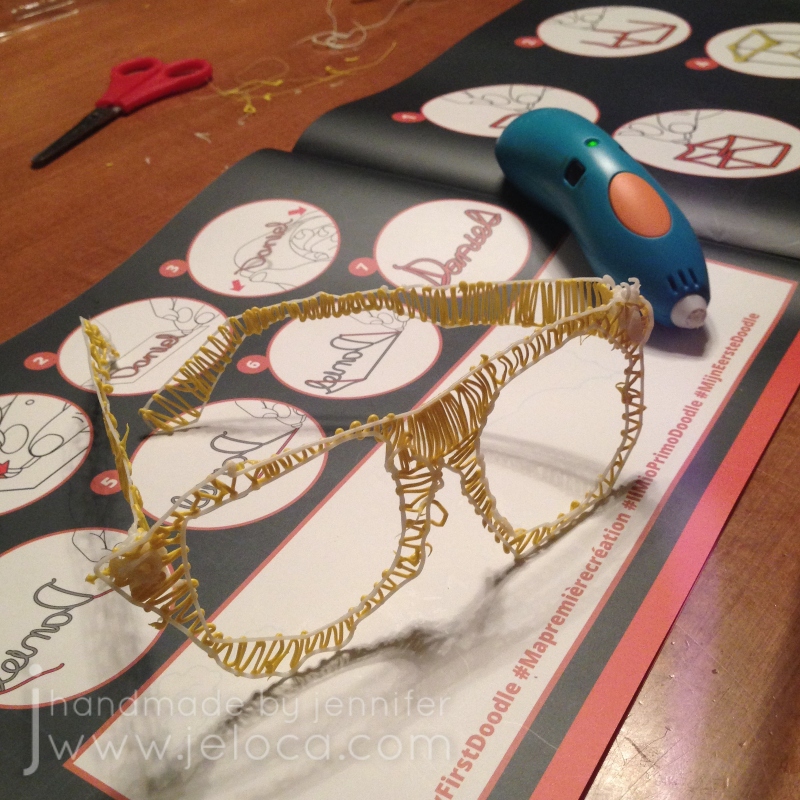
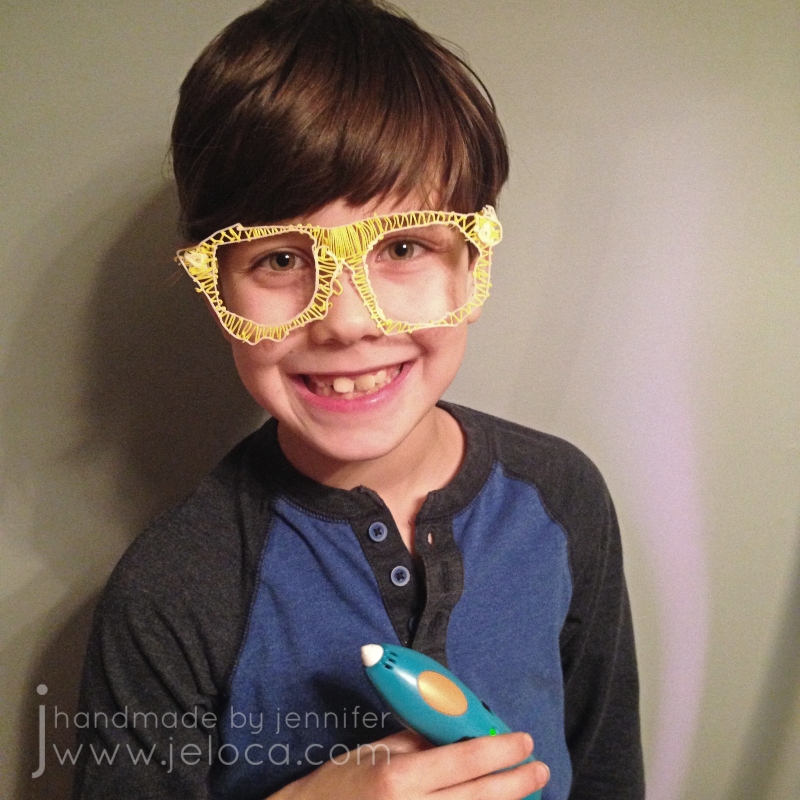
…and then we had a complete pair of glasses!

It was such a fast, easy project that really got Henri excited about the possibilities.

Just like when using a glue gun, the 3D filament can leave trails as you stop or switch colors. These trails are very easy to snip off with a regular pair of scissors and after playing around for a while on the projects we had very little filament waste.

Henri was SUPER proud of his creation and couldn’t wait to make more things.

Long-time readers of this blog might be a little confused now, since Henri looks a little young in this pic. In fact I first shared this pic in this post, back in 2017. It’s true – Henri will be 14 on Sunday and this pic was taken 6 years ago right after he received this gift for his 8th birthday. So why am I posting this review now, alllllllll these years later?

Because he still uses it and it still works JUST as good as on Day 1. It’s true! Most toys, and especially most electronic toys, don’t hold up to long-term wear and tear, but the 3Doodler start is in semi-regular rotation around here and it’s still working great. We have a bunch of 3D “printed” items around the house, from a heart that he made me for Mother’s Day 2-3 years ago to a solid 1″ cube/die to an automated vehicle he’s been working on here and there during school breaks using an add-on motorization kit. A few times now he’s even used it for some minor household repairs!

Not only is the pen still actively being sold and supported but you can also still get filament packs in all kinds of colors, including solids and variety packs. One fun thing we like to do is to use page protectors as “drawing” surfaces so we can put images or text inside to trace or use for inspiration. You can even get cases to hold your pen, charger and filaments to keep them compact and portable!

All in all we both agree that the 3Doodler Start is a great entry-level 3D pen for kids or adult beginners to allow you to experiment with 3D creations without breaking the bank. Plus, it’s durable, allowing us to use the same one without issue or repair for almost 6 years now.

This post may contain affiliate links. This means I might make a small commission on purchases made through the links, at no cost to you.