Leave a comment

R2D2 Pincushion DIY

Star Wars Day was a few days ago so it’s completely fitting to share this R2D2 pincushion DIY I made a few years ago.

I was brainstorming ideas for a crafty gift exchange in an online group. My giftee was a big Star Wars fan and her favorite craft was quilting. Around the same time I’d been browsing CraftyPod and had come across Diane’s plastic canvas needle book with built-in pincushion.

The puffy pincushion immediately made me think of R2D2’s top dome and I wondered if I’d be able to do something similar atop a plastic canvas base. It worked but I did one thing wrong so I’ll tell you what to do so you don’t make the same mistake I did!

You will need:

I started out by making the base, so I could later cut the circle to the proper size. This is easier than making the dome and needing to fit your design for the base into those constraints.

I found some good sample images for R2D2 online and drafted out a cross stitch pattern for his body. If you copy my chart you will need a plastic canvas rectangle that is 26 holes high by 67 holes wide. You can also stitch the body first and cut it out afterwards if you prefer.

Following the chart above, cross stitch the body design onto your plastic canvas. The majority of Artoo is white with some smaller gray areas and some blue.
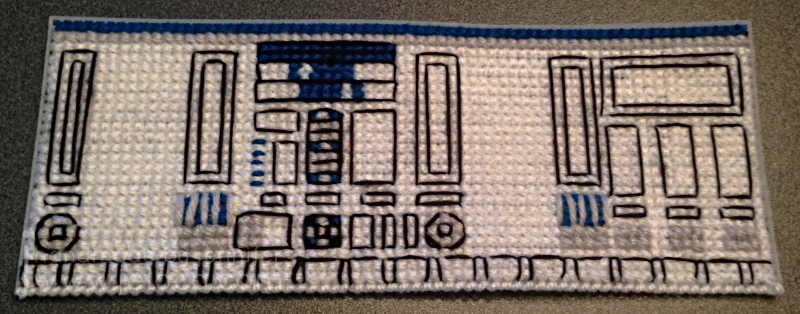
Once the base stitching is complete separate your yarns into plies and use them single-strand to work backstitch on the outline areas. Black is used for all the main panel shapes and round areas, gray is used on both blue grills and blue is used for the vertical dashes on the front section. Note that the red border is the boundaries of the design and is not stitched.

Using white yarn, whipstitch around the lower edge of the body. Leave the sides and top unstitched as they will be used in seaming later.

I only gave Artoo only two legs in this design as he was standing upright and the third leg would not be seen underneath. I think it would look even better and more authentic if you made him tilted back with all 3 legs visible!

To make his legs stitch the above chart twice onto plastic canvas. When working be sure to mirror the gray segments at the top so the two legs are opposite (see image below).

As before the red designates the boundaries of the design and should not be worked.

Using single strands of black and gray yarn, embroider the outline details on both legs.

Using white yarn, sew the two legs into place on the body, following the placement as shown above. Sew down directly through the two layers of plastic canvas making tacking stitches 1 square high, and following along the sides and top of the legs. Be sure to put the correct leg on the correct side.

Using white yarn, whipstitch the two side edges together. This will join his body into it’s cannister shape. This base structure should be able to stand on its own on the two legs.

Now that you have your base diameter set you can cut out an appropriately-sized ring from your plastic canvas circle.

Lay your plastic canvas circle on top of the body and mark which ring of holes is closest to the top’s diameter. If you don’t have an exact match pick the one that is slightly smaller. I removed the inside of my ring leaving only one hole to stitch, but this proved unnecessary in the end as I did not wind up putting my pincushion through the ring as was done in the inspiration project.

With gray yarn, fill the outside row of holes by stitching up and down through them, then again to fill the alternate holes. You want at least one or two rows of holes filled with gray yarn in case they show later. Also trace your new circle onto a piece of heavy cardstock or foam core and cut it out.

In the image above you can see the size of my original ring and then the one I cut out. You can also see my foam core disk.

Test your alcohol markers on a corner of your white fabric. You want to find the right colors that match your blue yarn while also making sure that your markers won’t feather at the edges. You want a marker that will allow you to draw shapes that will retain crisp edges and not bleed into other sections. With the markers I had on hand and my particular fabric, Spectrum Noir worked best. I liked the color of the Bics better but it bled a little more and I didn’t want to take a chance on ruining my design.
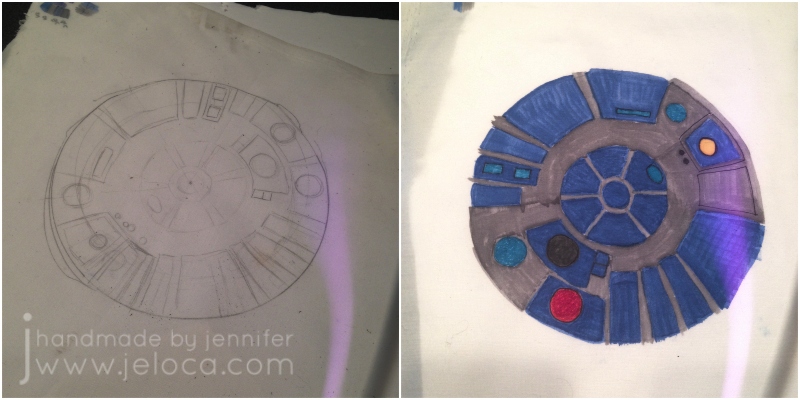
Knowing that the dome would be puffy, I added about 2″ extra to my disk’s diameter and traced out a larger circle. Using a clear image of R2D2’s dome as a reference I sketched out roughly where the various components went, and then colored it all in with my alcohol markers.

Then I cut out the dome. This is where I messed up. I forgot to take into account that gathering the fabric would mean losing at least the outer 0.5″ underneath my foam core disk. I SHOULD have cut out Artoo’s dome leaving a good 1″ minimum of white around the edges. You can leave this outer ring white or alternately you could extend the colors that touch the edges outwards for at least 0.5″.

To create your pincushion you’ll want to thread your sewing needle with thread and pass a running stitch all the way around the circumference of the dome. As you can see in the top right image, when you start to pull on the thread it will gather your dome into a cup shape. Unfortunately mine gathers part of Artoo’s details and they get hidden underneath. You’ll want to arrange your gathers so that it is the excess white fabric that gets gathered underneath and the full dome pattern is visible above.

Once you’ve stitched your running stitch turn the dome over and add your stuffing. Place your cardstock or foam core on top to give your dome a solid, flat base. Then gather your threads tightly and secure in place. You can run extra threads across from side to side if desired.

The last step for assembly is to attach the dome to the base. Use your same sewing thread and needle to secure the plastic canvas ring to the underside of the dome. Then use gray yarn and your yarn needle to whipstitch the two plastic canvas pieces together. You might need to ease in some stitches if you don’t have a direct 1-to-1 line up. It can help to pin the dome in place with locking stitch markers, marking each quarter so that you know the dome is in the correct position. (Be sure that he’s facing the right way!)

With that, your R2D2 pincushion is done! Yours will look better than mine because his whole head will be showing. Still- I’m happy with him and best of all the recipient loved him and sent me a pic later of him put to good use holding her pins.

Happy (belated) Star Wars Day!
This post may contain affiliate links. This means I might make a small commission on purchases made through the links, at no cost to you.


Leave a comment

Play Furniture and Pretend Food From Recycled Materials

November 15th was National Recycling Day and I thought it would be fun to share some toy accessories that you can make by recycling materials you have on-hand.

This all started back when Henri had received a Zhu-Zhu Pets toy hamster for Hanukkah one year. It wasn’t long before his “pet” needed to have its own house and so we adapted a shoe box into rooms with a garage.

Of course every home needs furnishings and that’s where these projects came in. According to Henri there was a bedroom, kitchen and living room, so I tailored what I made to that, but you can easily adapt any of these little projects to your rooms of choice.

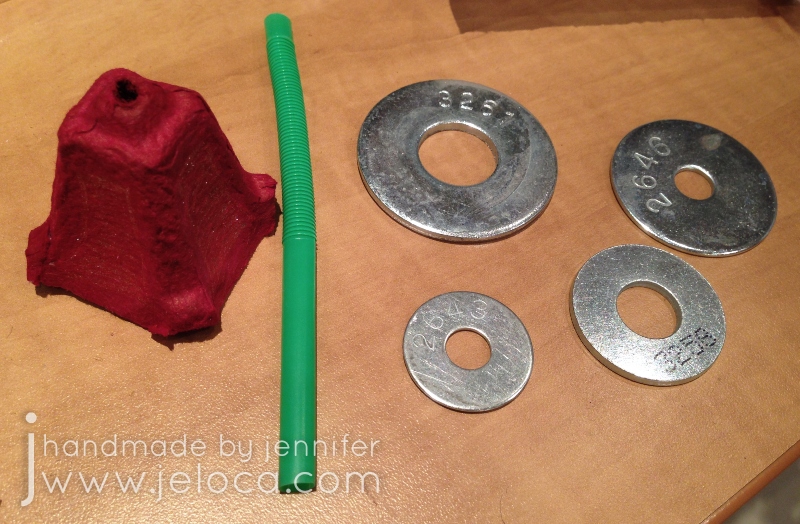
The first recycled materials to be used were an egg carton and a plastic bendy straw. Cut out sections of the carton to create different types of furniture.

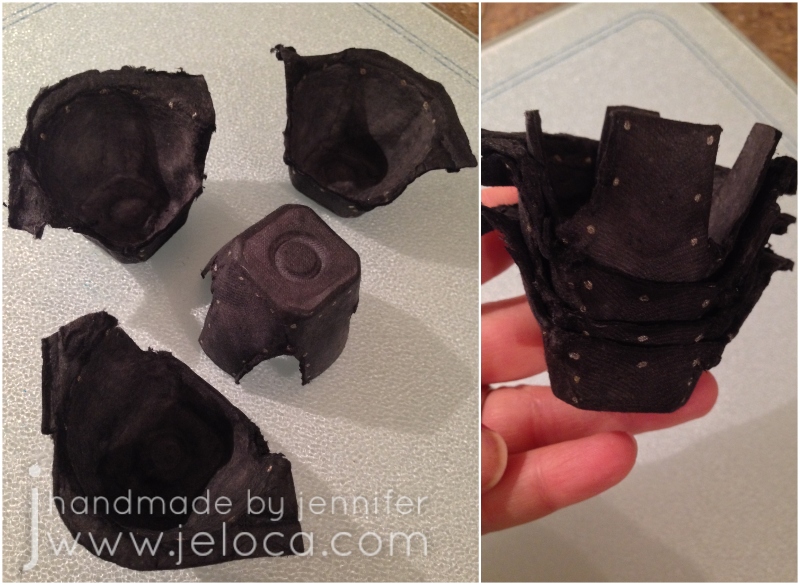
The cups that hold the eggs became armchairs (when the upper rim was kept on 3/4 of the edge) and a table (when flipped upside down and trimmed to have legs).

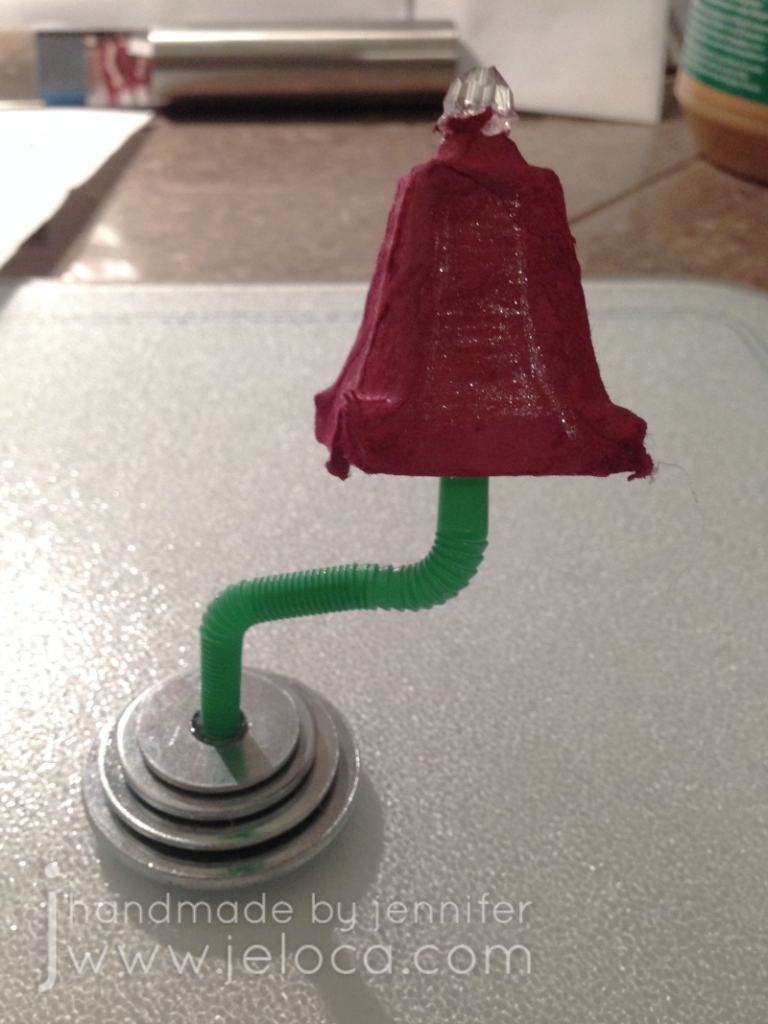
Two of the flat base of the egg cups were cut out to become vessels for food and water, and finally the divider piece that separates the eggs was cut out to become a lampshade.

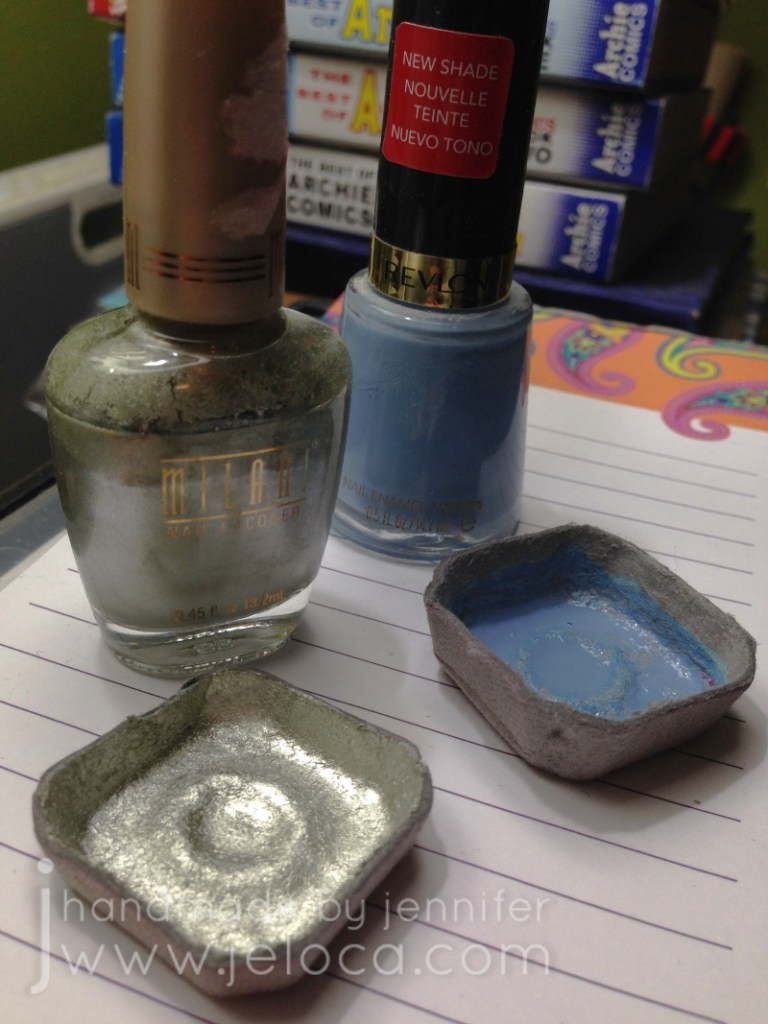
One of the cup bases was painted silver to become a serving plate and the slightly deeper one had the inside painted blue to appear like water. To make the most out of using what I had on hand (pun intended!) I painted them both with nail polish!

The lamp shade was painted Henri’s color of choice with regular acrylic paints and then set aside to dry.

Once dry it was time to assemble the lamp. You need a base that’s sturdy and heavy enough to support the weight of the shade. You could use wood blocks, a little box filled with rice or sand, or anything else heavy enough. I used a few spare washers I found in my toolbox.

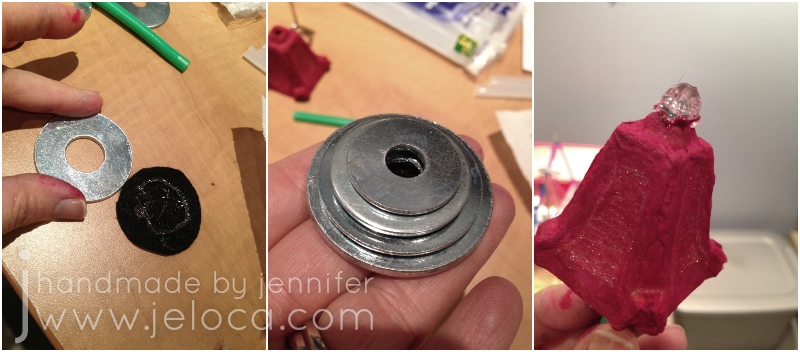
I cut a felt circle for the base and hot-glued the washers on top in descending size order, making sure to keep their holes lined up. I also glued a decorative bead to the top of the lampshade.

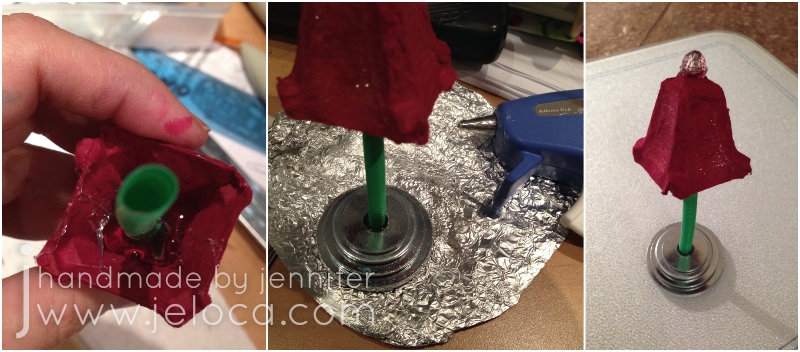
The shade was filled with hot glue to set the straw in place and then more glue was used to attach it inside the tower of washers.

With that, the little hamster’s living room lamp was complete!

The bendy bit of the straw was a nice touch, allowing the lamp to be angled wherever the little guy needed.

The silver platter received a coat of clear nail polish to seal it and the water bowl was filled with more hot glue to look full.

To make the pretend food for the hamster takes only three supplies – a pool noodle, fabric paint, and scissors.

That’s right – all these little pretend foodstuffs are actually squishies! They’re really easy to make: simply cut pieces of the pool noodle foam into the general shape of the food item then use fabric paint to make them look like their respective foods. A toothpick comes in handy instead of a paintbrush when working at such small sizes. I scaled my foods to the size of the egg carton “plate” and made (clockwise from top right) pepperoni pizza, chocolate chip cookies, donuts, a cheeseburger, and a chocolate cake.

The food storage bin was made from plastic canvas and yarn scraps.

First I made a base large enough to hold all the food. The lid is the same size but less deep, and the faux latch is simply stitched on top. The lid was sewn to the base all along the back edge but I used the same gold yarn as the latch to embroider 2 fake “hinges”.

The living room furniture was painted black and copper “studs” were added with a paint pen. One neat thing about using the egg cups is that the furniture will stack which makes putting it away after playtime that much easier.

Finally the hamster’s cardboard box bed was upgraded to one with a full headboard and footboard, and painted with gold glitter paint.

I used scraps of white felt and stuffing remnants to make a mini mattress and pillow, and leftover sock yarn knit up quickly to make a colorful blanket.

One evening of crafting and by morning the hamster had his house completely tricked out. Henri was really excited to set everything in place and added more to the decor by painting a rug in the living room and even drawing a TV on the wall!

Bonus – I wanted to take some current pics to show how well these little accessories held up after 6 years and we thought it would be really cute to include Jakob’s REAL hamster for scale. Here’s Dusty enjoying a little nap…

…and here he is foraging in the snack box looking to see what other treats there might be.

These were such simple, quick and easy DIYs to make and became playtime accessories that were loved and used over and over, AND held up incredibly well over the years. I hope this post gives you some ideas on how you can recycle items from around the house and give them new life with a new use.


Leave a comment

How to Make Plastic Canvas Gift Tags

Looking for a different way to label your gifts this holiday season?

These personalized plastic canvas gift tags are quick and easy to make and are reusable as charms after the wrapping paper’s been recycled.

You only need a few supplies to get started:

  • plastic canvas – I used 7-ct but if you have a more complicated design that you want to fit into a small area, you can use 10-ct or 14-ct. (The “count” is how many holes per inch).
  • plastic lobster hooks – metal will work just as well. You can even cannibalize hardware from broken keychains or charms you already own
  • yarn – scraps from other projects will work great for this
  • yarn needle
  • scissors

The first step is to choose your designs so you can create a chart. My example tags were made for a young boy whose name starts with a “B” and was really into Minecraft, and a young girl whose name starts with “K” and was really into Monster High. So I decided to put their initials on one side and something iconic from each theme (Creeper & Skullette) on the other.

I used Excel to create my charts but you can just as easily use graph paper. If using Excel resize your cells into squares and then use the color fill to draw your designs, 8-bit pixel-style.

For the Creeper tag I went with a square shape since most Minecraft mobs have square heads. I then “drew” a capital b in a grid of the same size as the Creeper face. I decided not to do the typical blend of colors for the Creeper since this was just a quick add-on to the birthday party gift we were giving, but you can get as creative as you’d like!

For the Monster High tag I found a free-use Skullette chart and used the size of that chart as a basis for my “K” chart, which I drafted in a font similar to that of the Monster High lettering.

You have freedom to design anything you’d like for your tags! Your only limit is the total size you’d like your tags to be, as the bigger your design, the bigger the results.

The next step is to cut out plastic canvas pieces the sizes required for your tags. Remember that it takes 2 holes on the diagonal to make 1 continental or cross stitch with plastic canvas, so if your grid is 10×10 pixels then you need to cut out a piece of plastic canvas 11 holes x 11 holes, etc.

Stitch your pieces as desired. I used continental stitch (half of a cross-stitch) and did the green background for each piece first, leaving one piece with a tail about 3-4 times as long as the full perimeter. This is optional but by leaving the seaming yarn as your tail it’s one less end to hide later.

After the green I filled in the spaces with black for the “B” and the Creeper’s face.

I followed the same process for the other tag, working from background first to the details last, so the details would remain sharp and not risk getting fuzzy at the edges. First I did the white background (flipping Skullette so the bow would be on the right since the original chart was for Perler beads which get flipped after ironing), then the purple (as I didn’t have pink scraps handy), and finally the black, which I also used to backstitch some shading under the “K”. I didn’t do the tail trick for this one as I wanted to seam it with a different color.

To seam, hold the pieces with wrong-sides together and go from back to front through the first corner 3 times. Next whipstitch around the first side and when you get to the next corner, go through it 3 times again, and continue this process around. When you get to the corner where you’d like to put the hook, do the first corner wrap, then wrap twice while also going through the hook’s jump ring, then go through the corner alone once more.

After all 4 sides are fully seamed you can skim your needle through one side’s wraps and pull the yarn through, for about an inch, then trim the excess as close as you can.

These little tags are under 3″ making them perfect to clip onto a schoolbag or tote.

They really add a personal, handmade touch to a gift without taking too much time or costing the bank.

Have fun creating your own!

This post may contain affiliate links. This means I might make a small commission on purchases made through the links, at no cost to you.